Medical insurance coverage for pre-existing conditions is now more accessible than ever thanks to the Affordable Care Act. If you have a health condition like diabetes or asthma, you can still get comprehensive coverage without denial or extra costs. This guide explains your rights, how the law protects you, and practical steps to secure the best plan for your needs.
Key Takeaways
- Pre-existing conditions are protected: Federal law prohibits insurers from denying coverage or charging more based on health history.
- No waiting periods: Most plans must cover pre-existing conditions immediately, not after a 6-month exclusion.
- Medicare and Medicaid vary: While Medicare covers many pre-existing issues, rules differ; Medicaid eligibility depends on income and state.
- Marketplace plans offer full protection: Plans purchased through HealthCare.gov or state exchanges comply with ACA standards.
- Employer plans must follow the law: Large group health plans cannot discriminate based on health status.
- Know your rights: You can appeal denials and report violations to your state insurance department.
- Consider supplemental coverage: Critical illness or hospital indemnity policies can help bridge gaps in major medical plans.
📑 Table of Contents
- Medical Insurance Coverage for Pre Existing Conditions: Your Complete Guide
- What Is a Pre-Existing Condition?
- How Medical Insurance Covers Pre Existing Conditions Today
- Where to Get Coverage with Pre-Existing Conditions
- Special Enrollment Periods and Open Enrollment
- What If Your Plan Denies a Claim?
- Supplemental Insurance for Extra Protection
- Tips for Getting the Best Coverage with Pre-Existing Conditions
- Real-Life Example: Sarah’s Story
- Common Myths About Pre-Existing Conditions
- Conclusion: You’re Not Alone
Medical Insurance Coverage for Pre Existing Conditions: Your Complete Guide
If you’ve ever been turned down for health insurance because of a past illness or chronic condition, you’re not alone. For years, people with diabetes, heart disease, asthma, or even depression faced high premiums or outright denials. But things changed with the Affordable Care Act (ACA), also known as Obamacare. Today, federal law protects you from being excluded because of your health history. That means medical insurance coverage for pre-existing conditions is not only possible—it’s guaranteed under most circumstances.
This article walks you through what “pre-existing conditions” really means, how the law protects you, and what steps you can take to get the best coverage. Whether you’re shopping for your first plan, changing jobs, or just want to understand your rights, this guide gives you clear, practical advice. We’ll cover marketplace plans, employer coverage, Medicare, Medicaid, and even supplemental options. By the end, you’ll know exactly where to go and what to expect.
What Is a Pre-Existing Condition?
A pre-existing condition is any health issue you had before enrolling in a new health insurance plan. It could be a diagnosed illness, a chronic disease, a past surgery, or even a condition you suspected but never confirmed. Examples include:

Visual guide about Medical Insurance Coverage for Pre Existing Conditions
Image source: lifeinsuranceguideline.com
- Diabetes (Type 1 or Type 2)
- High blood pressure or heart disease
- Asthma or other respiratory conditions
- Mental health disorders like depression or anxiety
- Autoimmune diseases such as lupus or rheumatoid arthritis
- Previous cancer or treatment history
- Obesity (if linked to health complications)
Importantly, the law doesn’t require you to have a formal diagnosis. If a doctor recommended treatment or medication for a condition you knew about before enrolling, that could still be considered pre-existing. The key is whether you had medical knowledge of the condition prior to applying.
How Insurers Used to Treat Pre-Existing Conditions
Before the ACA, health insurers had free rein. They could:
- Deny coverage entirely
- Charge 3–5 times more in premiums
- Impose waiting periods of 6 months or more before covering related treatments
- Exclude specific conditions from coverage
This left millions of Americans uninsured or underinsured. A person with asthma might pay $1,200 a month just for a plan that didn’t cover inhalers. Or worse, they might have no plan at all.
What Changed After the ACA?
The Affordable Care Act, passed in 2010, banned these practices. Today, all individual and small group health plans sold in the U.S. must offer medical insurance coverage for pre-existing conditions without discrimination. No exclusions. No waiting. No higher prices. This applies to plans sold on HealthCare.gov, state exchanges, and even some off-exchange policies.
How Medical Insurance Covers Pre Existing Conditions Today
Thanks to the ACA, you can get comprehensive health insurance even if you have a history of illness. Here’s how it works:
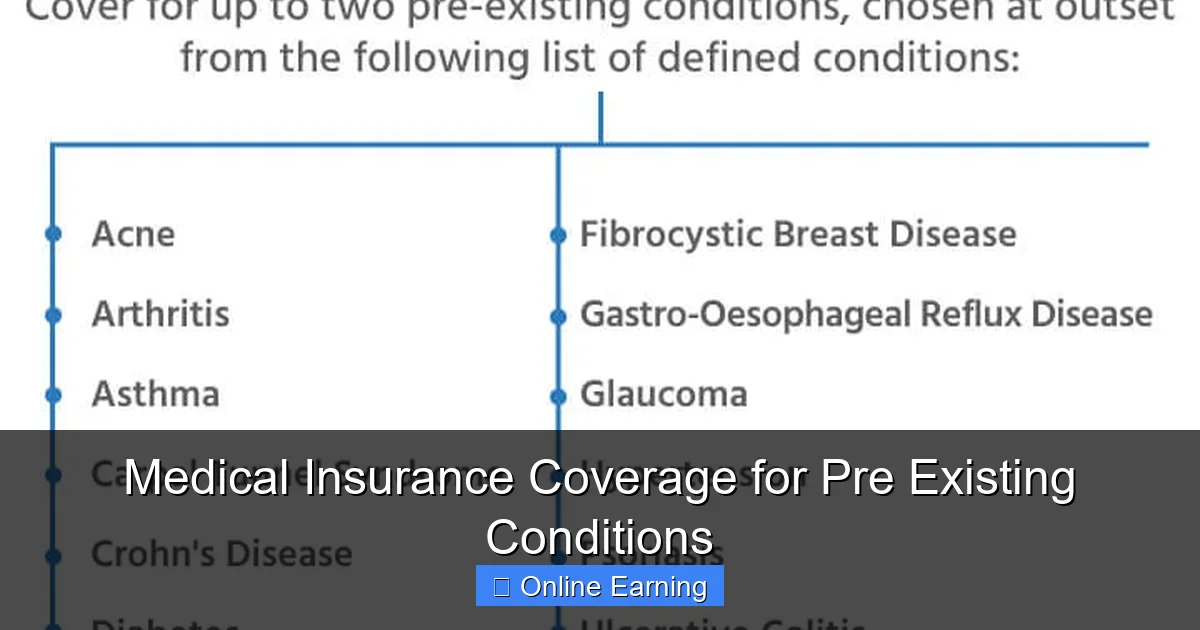
Visual guide about Medical Insurance Coverage for Pre Existing Conditions
Image source: generalandmedical.com
No More Exclusions
Insurers cannot refuse to cover treatment for a pre-existing condition. For example, if you have diabetes and enroll in a marketplace plan, the insurer must cover insulin, doctor visits, blood sugar tests, and diabetes education—all from day one.
No Waiting Periods
Many older plans used a 6-month waiting period before covering pre-existing conditions. Now, all compliant plans must cover these conditions immediately. You don’t have to wait. You don’t have to prove you’ve been stable for a year.
Premiums Based on Age, Not Health
Insurers can charge older adults up to three times more than younger people, but they can’t charge more because of your health. So if you have cancer history, your premium won’t be higher than someone without it—unless you’re over 65.
Essential Health Benefits Apply
All ACA-compliant plans must cover ten essential health benefits, including:
- Preventive care (like mammograms and flu shots)
- Mental health and substance use treatment
- Pregnancy and maternity care
- Prescription drugs
- Emergency services
- Laboratory services
This means your pre-existing condition will be treated with the same level of care as any other condition.
Where to Get Coverage with Pre-Existing Conditions
You have several options for obtaining medical insurance coverage for pre-existing conditions. The best path depends on your income, employment, age, and location.
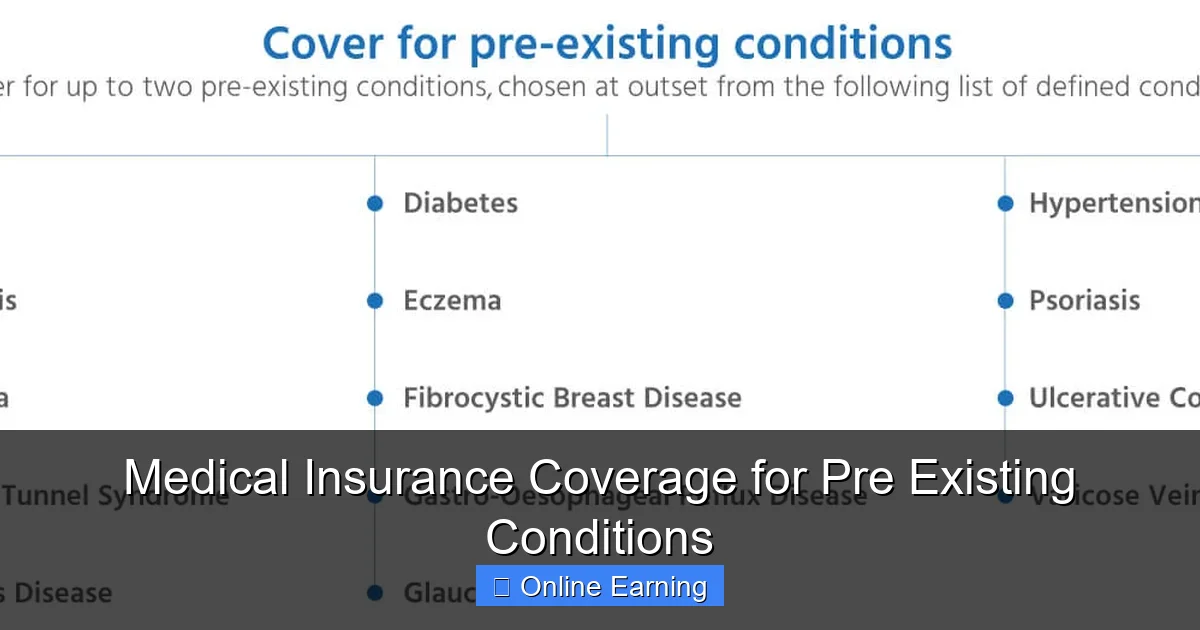
Visual guide about Medical Insurance Coverage for Pre Existing Conditions
Image source: generalandmedical.com
Health Insurance Marketplaces (Exchange Plans)
These are government-run or state-based websites where you can compare and buy health plans. Examples include HealthCare.gov (federal) and Covered California (state-run).
- Pros: All plans cover pre-existing conditions; subsidies may lower costs
- Cons: Enrollment only during open enrollment or special periods
- Tip: Use the “Savings Calculator” on the marketplace to see if you qualify for subsidies based on income.
Employer-Sponsored Health Plans
If your job offers health insurance, you’re covered. Most large employers (20+ employees) must follow ACA rules.
- Pros: Often group rates mean lower premiums; easy enrollment
- Cons: Limited choice; may not be available for part-time workers
- Tip: Ask HR if your plan includes prescription coverage and specialist access.
Medicare
Medicare is federal health insurance for people 65 or older, or those with certain disabilities. It covers pre-existing conditions, but with some nuances.
- Original Medicare: Part A (hospital) and Part B (medical) cover services related to any condition, pre-existing or not.
- Medigap: Private supplemental plans help pay out-of-pocket costs. All standardized Medigap plans (A–N) must cover pre-existing conditions after a waiting period.
- Medicare Advantage (Part C): Private plans that replace Original Medicare. Most cover pre-existing conditions immediately.
Medicaid
Medicaid is a joint federal and state program for low-income individuals. It covers pre-existing conditions, but eligibility varies by state.
- Pros: Often includes dental, vision, and long-term care
- Cons: Income limits apply; not all states expanded Medicaid
- Tip: Check your state’s Medicaid website or use the HealthCare.gov eligibility checker.
Short-Term Health Plans (Not ACA-Compliant)
These are temporary plans with limited coverage and no guarantee of pre-existing condition protection.
- Warning: They can deny claims for pre-existing conditions and exclude essential benefits.
- Best for: Bridging coverage for a few months—not long-term health security.
Special Enrollment Periods and Open Enrollment
You can only enroll in most health plans during specific times. Understanding these periods is crucial if you have a pre-existing condition.
Open Enrollment (Annual)
This is typically November 1 to January 15 each year. During this time, you can sign up for a new plan or switch existing coverage.
- Tip: If you miss open enrollment, you may wait until the next year—unless you have a qualifying life event.
Special Enrollment Period (SEP)
You can enroll outside open enrollment if you experience a qualifying event, such as:
- Getting married or divorced
- Having a baby
- Moving to a new state
- Loss of job-based coverage
- Becoming eligible for Medicaid or Medicare
These events give you 60 days to enroll in a marketplace plan with full pre-existing condition protection.
What If Your Plan Denies a Claim?
Even with protections, insurers sometimes deny claims. If this happens, don’t give up. You have rights.
Step 1: File an Internal Appeal
Most plans require you to appeal the denial within 180 days. Write a clear letter explaining why you believe the claim should be covered.
Step 2: Request an External Review
If the internal appeal fails, you can ask for an independent review by a third party not affiliated with the insurer.
Step 3: Contact Your State Insurance Department
Each state regulates health insurers. You can file a complaint if you believe your rights are violated. They can investigate and intervene.
Step 4: Seek Legal Help
Nonprofits like Patient Advocate Foundation offer free help with insurance disputes. Legal aid organizations may also assist.
Supplemental Insurance for Extra Protection
While major medical plans cover pre-existing conditions, they don’t cover everything. That’s where supplemental insurance comes in.
Critical Illness Insurance
Pays a lump sum if you’re diagnosed with a covered condition like cancer, heart attack, or stroke. Useful for covering travel, childcare, or lost income during treatment.
Hospital Indemnity Plans
Pays a fixed amount per day you’re hospitalized. Helps offset copays, deductibles, and non-covered expenses.
Accident Insurance
Covers injuries from accidents—like broken bones or burns. Not related to pre-existing conditions, but helpful if you’re active or have mobility issues.
Tips for Getting the Best Coverage with Pre-Existing Conditions
Here’s how to make the most of your options:
- Compare Plans Side by Side: Use the marketplace’s “Compare” tool to see premiums, deductibles, and drug formularies.
- Check the Drug List (Formulary): Make sure your medications are covered at the lowest tier.
- Use In-Network Providers: Out-of-network care costs more. Verify your doctors are in-network.
- Ask About Preventive Services: All ACA plans cover preventive care at 100% with no copay.
- Keep Records: Save all medical records, claim denials, and correspondence with insurers.
- Reassess Annually: Your needs may change. Re-evaluate your plan during open enrollment.
Real-Life Example: Sarah’s Story
Sarah, 42, was diagnosed with Type 2 diabetes in 2020. She lost her job in 2023 and had no health insurance. During open enrollment, she enrolled in a marketplace plan through HealthCare.gov.
She used the “Plan Finder” tool and selected a Silver plan with a $250/month premium. Thanks to subsidies based on her income, her out-of-pocket costs were low. The plan covered her insulin, glucose monitors, and annual A1C tests—all without a waiting period.
When she needed a specialist, she used the plan’s directory to find an endocrinologist in-network. Her first visit cost only a $30 copay.
“I was terrified I’d be priced out of coverage,” Sarah says. “But now I have peace of mind. I’m managing my diabetes, and my insurance treats it like any other condition.”
Common Myths About Pre-Existing Conditions
Let’s clear up some misconceptions:
- Myth: “I can’t get insurance if I have a pre-existing condition.”
- Truth: You can get full coverage under the law.
- Myth: “I have to wait months before my condition is covered.”
- Truth: All ACA plans cover pre-existing conditions immediately.
- Myth: “Only marketplace plans cover pre-existing conditions.”
- Truth: Employer plans, Medicare, and Medicaid also comply.
- Myth: “I can’t get a plan if I’ve been denied before.”
- Truth: Denials are illegal now. You have the right to apply.
Conclusion: You’re Not Alone
Getting medical insurance coverage for pre-existing conditions is no longer a battle. Thanks to the Affordable Care Act, you have strong legal protections. Whether you’re shopping on the marketplace, working for a company, or enrolled in Medicare, your health history can’t be used against you.
The key is knowing your options and acting during the right time. Use open enrollment, file appeals when needed, and don’t hesitate to ask for help. Nonprofits, state agencies, and online tools are all here to support you.
Your health matters. And today, it’s easier than ever to protect it—even with a pre-existing condition. Take the first step: visit HealthCare.gov or your state exchange today.
Frequently Asked Questions
Can I get health insurance if I have a pre-existing condition?
Yes, federal law prohibits insurers from denying coverage or charging more based on health history. All ACA-compliant plans must cover pre-existing conditions immediately.
Do all health plans cover pre-existing conditions?
No. Short-term plans and grandfathered policies may exclude pre-existing conditions. Only ACA-compliant plans—marketplace, employer-sponsored (large group), Medicare, and Medicaid—offer full protection.
Is there a waiting period for pre-existing conditions?
No. ACA plans cannot impose waiting periods. Coverage begins on the first day of your policy, regardless of your health history.
Can I buy a plan if I was previously denied?
Yes. Denials based on pre-existing conditions are illegal. You can apply during open enrollment or a special enrollment period.
How do I appeal a denied claim?
Start with an internal appeal to your insurer. If denied again, request an external review. You can also contact your state insurance department for help.
Will my premiums be higher because of my condition?
No. Insurers can’t charge more due to health status. They can only adjust premiums based on age, location, and tobacco use.