The UK Health Surcharge (IHS) is a mandatory fee paid by most visa applicants to access the National Health Service (NHS). Alongside visa application fees, it adds to the total cost of moving to the UK. This article breaks down what the IHS covers, how much you’ll pay, who’s exempt, and how to pay it smoothly. Whether you’re applying for a student, work, or family visa, understanding these fees helps you budget accurately and avoid delays.
Key Takeaways
- What is the UK Health Surcharge? It’s a yearly fee paid by visa applicants to access NHS services during their stay in the UK.
- Who must pay it? Most visa categories require payment, including students, workers, family visa holders, and asylum seekers (with exceptions).
- How is it paid? You pay online when applying for your visa; it’s included in the visa fee total.
- Is it refundable? No, the IHS is non-refundable, even if your visa is denied or you leave the UK early.
- Are there exemptions? Some groups, like diplomatic staff or those with long-term health insurance, may be exempt.
- Can you apply for a refund? In rare cases, like if you overpaid or were wrongly charged, you can request a refund through UKVI.
li>How much does it cost? As of 2024, the IHS is £624 per year for adults and £470 for children under 18.
📑 Table of Contents
- Introduction: Why the UK Health Surcharge Matters
- What Is the UK Health Surcharge (IHS)?
- Who Needs to Pay the UK Health Surcharge?
- How Much Is the UK Health Surcharge?
- How to Pay the UK Health Surcharge
- Can You Get a Refund on the UK Health Surcharge?
- Common Mistakes to Avoid
- UK Health Surcharge vs. Private Health Insurance
- Frequently Asked Questions (FAQs)
- Conclusion: Plan Ahead, Pay Smart
Introduction: Why the UK Health Surcharge Matters
Planning to move to the UK? Whether you’re heading there for university, work, or to join family, you’ve probably seen two numbers on your visa checklist: the visa application fee and the UK Health Surcharge. These aren’t just bureaucratic hurdles—they’re real costs that affect your budget and visa approval timeline.
The UK Health Surcharge, often called the IHS (Immigration Health Surcharge), is designed to ensure that non-European Economic Area (EEA) nationals contribute to the NHS while in the UK. Think of it as a prepayment for healthcare access during your stay. Alongside the standard visa fee, it’s one of the most important financial steps in your UK immigration journey.
This guide will walk you through everything you need to know—what the IHS covers, how much it costs, who pays it, and how to avoid common mistakes. By the end, you’ll feel confident handling both the visa and health surcharge process like a pro.
What Is the UK Health Surcharge (IHS)?
The UK Health Surcharge is a mandatory payment required by most non-EEA nationals applying for a UK visa. It gives you access to the National Health Service (NHS) during your stay in the UK, just like a local resident would. Without paying the IHS, you won’t be able to use most NHS services—even for emergencies in some cases.

Visual guide about Uk Health Surcharge and Visa Fees Explained
Image source: united-kingdom-visa.com
It’s important to note that the IHS doesn’t replace private health insurance. If you’re staying long-term (usually more than 6 months), the surcharge gives you full access to NHS care. For shorter stays, like tourist visas, you may still need private insurance.
How Is the IHS Different from the NHS?
Many people confuse the IHS with the NHS itself. The NHS is the publicly funded healthcare system in the UK. The IHS is simply a fee you pay to access it. Think of it like a membership fee for using a service.
For example, if you’re a student from India applying for a Tier 4 visa, you’ll pay both the visa fee (£363 in 2024) and the IHS (£624 per year). The total cost for a 3-year course would be £2,235—all upfront and non-refundable.
Why Was the IHS Introduced?
The IHS was introduced in 2015 to ensure fairness in healthcare access. Before that, some visa holders could access the NHS for free, while others had to pay privately. The surcharge equalizes access and ensures everyone contributes based on how long they plan to stay.
Who Needs to Pay the UK Health Surcharge?
Not everyone pays the IHS. The rules depend on your visa type, nationality, and length of stay. Let’s break it down by category.
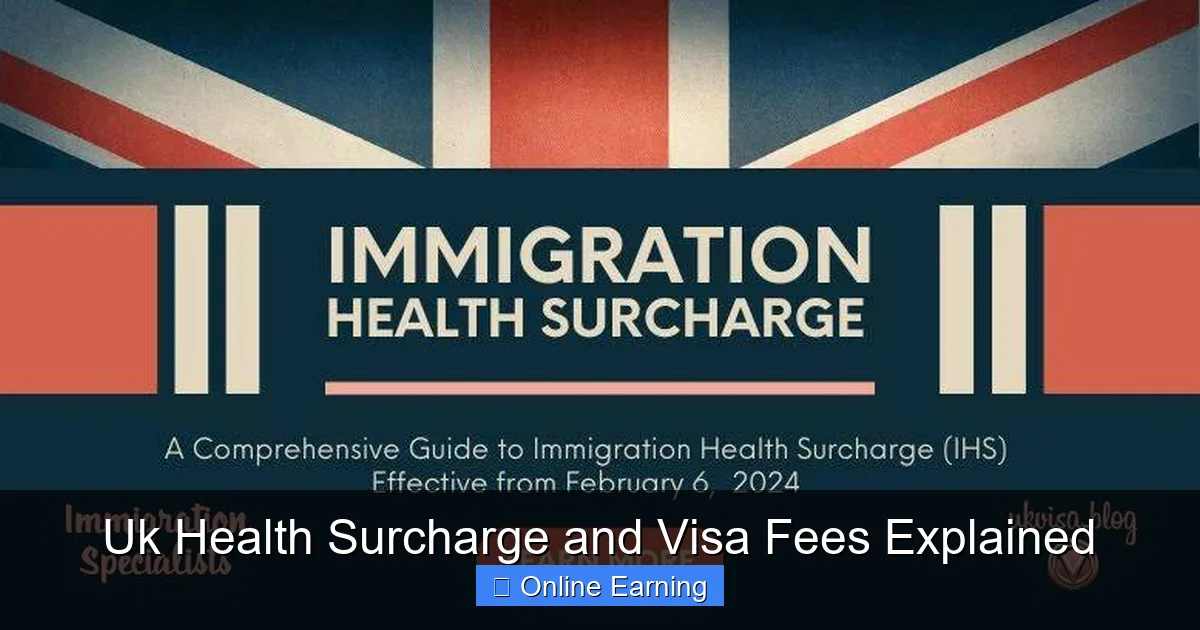
Visual guide about Uk Health Surcharge and Visa Fees Explained
Image source: ukvisa.blog
Visa Categories Requiring IHS Payment
- Student Visas (Tier 4): All international students applying for a student visa must pay the IHS. This includes undergraduate, postgraduate, and PhD students.
- Work Visas (Skilled Worker, Intra-Company Transfer, etc.): Most work visa applicants pay the surcharge unless they’re exempt.
- Family Visas: If you’re joining a UK-based partner or parent, you’ll usually need to pay the IHS.
- Visitor Visas (Long-term): If you’re staying longer than 6 months, you’ll pay the IHS. Short-term visitors (up to 6 months) don’t.
- Spouse, Partner, or Parent Visa: These are included in the family category and require IHS payment.
Who Is Exempt from the IHS?
Some groups are exempt from paying the UK Health Surcharge. Common exemptions include:
- Diplomatic or government officials with certain privileges.
- Those with long-term private health insurance approved by UKVI (rare and complex).
- Asylum seekers and victims of human trafficking—they get free NHS access.
- Children under 18 pay a reduced rate (£470/year), not a full exemption.
If you think you might be exempt, check the official UK government website or consult an immigration advisor before applying.
How Much Is the UK Health Surcharge?
The cost of the IHS depends on your age, visa type, and length of stay. As of April 2024, the standard rates are:
Visual guide about Uk Health Surcharge and Visa Fees Explained
Image source: static.tnn.in
- Adults (18 and over): £624 per year
- Children (under 18): £470 per year
- Students in higher education: £624 per year
- Visitors staying more than 6 months: £624 per year
How to Calculate Your Total IHS Cost
Multiply the annual rate by the number of years you’ll be in the UK. For example:
- A 2-year student visa: £624 × 2 = £1,248
- A 5-year work visa: £624 × 5 = £3,120
- A child on a 3-year student visa: £470 × 3 = £1,410
You pay the full amount upfront when submitting your visa application. No monthly payments or installments.
Are the Fees Increasing?
Yes. The UK government reviews the IHS annually. In 2023, it increased from £470 to £624 for adults. Keep an eye on updates before applying, as fees can change.
How to Pay the UK Health Surcharge
Paying the IHS is simple—and must be done online during your visa application. Here’s how it works:
Step-by-Step Payment Process
- Start your visa application on the official UK Visas and Immigration (UKVI) website.
- Fill out your personal and visa details.
- When you reach the payment section, you’ll see both the visa fee and the IHS listed separately.
- Pay using a credit or debit card. You cannot pay in cash or bank transfer.
- Once paid, you’ll receive a receipt. Keep it safe—you’ll need it for your application.
What Happens If You Forget to Pay?
You can’t submit your visa application without paying the IHS (if required). The system won’t allow it. You’ll have to go back and complete the payment before proceeding.
Can You Pay in Installments?
No. The IHS is paid in one lump sum at the time of visa application. There are no payment plans or monthly options.
Can You Get a Refund on the UK Health Surcharge?
In most cases, the IHS is non-refundable. This means even if your visa is denied, you leave the UK early, or your plans change, you won’t get your money back.
When Might You Get a Refund?
Refunds are rare and only happen in specific situations:
- You paid the IHS but were incorrectly charged.
- You overpaid due to a system error.
- Your visa application was refused due to a mistake by UKVI.
- You were exempt but paid anyway.
How to Request a Refund
If you believe you’re eligible for a refund, contact UK Visas and Immigration (UKVI) within 6 months of the payment date. Submit evidence (like a visa refusal letter or exemption notice) and explain your case. Approval is not guaranteed.
Example: Student Visa Refund Request
Sarah applied for a 2-year student visa, paid £1,248 in IHS, but was refused because her financial documents were incomplete. She contacted UKVI, provided the refusal letter, and requested a refund. After 4 weeks, she received confirmation of a full refund—because the refusal was due to an error on UKVI’s part.
Common Mistakes to Avoid
Even experienced applicants make mistakes with the IHS. Here are the most common errors—and how to avoid them.
Mistake 1: Not Checking Exemption Eligibility
Many people pay the IHS when they shouldn’t. For example, some students mistakenly believe they must pay, but if they’re from an EU country, they may be exempt. Always double-check your eligibility before paying.
Mistake 2: Using the Wrong Rate
Paying adult rates for a child, or vice versa, can delay your application. Always verify the correct IHS rate based on age and visa type.
Mistake 3: Delaying Payment
Paying late can cause processing delays. The IHS must be paid before submitting your application. Don’t wait until the last minute.
Mistake 4: Not Keeping the Receipt
Losing your IHS payment receipt can complicate your application. Save a digital copy and print a hard copy.
UK Health Surcharge vs. Private Health Insurance
Some people wonder if they can skip the IHS and just buy private health insurance instead. The answer is: no—for most visa types.
When Private Insurance Isn’t Enough
- Most UK visa rules require the IHS, not private insurance.
- Private insurance doesn’t cover emergency NHS treatment in all cases.
- UKVI may reject your application if you rely solely on private insurance.
Exceptions Where Private Insurance May Work
In rare cases, like short-term business visitors, private insurance might be accepted. But for students, workers, and family visa holders, the IHS is mandatory.
Tip: Use Both for Peace of Mind
Even if you pay the IHS, consider adding private insurance for extra coverage—especially for dental, optical, or non-urgent care not fully covered by the NHS.
Frequently Asked Questions (FAQs)
Do I need to pay the UK Health Surcharge if I’m from the EU?
No, citizens from the European Economic Area (EEA) and Switzerland are exempt from the IHS when applying for UK visas. However, from 2021, EU nationals need a visa to work, study, or live long-term in the UK.
Can I pay the IHS after my visa is approved?
No. The IHS must be paid during the visa application process. You cannot pay it later, even after your visa is granted.
Is the UK Health Surcharge the same for all visa types?
Most visa types require the IHS, but the cost and eligibility vary slightly. For example, student and work visas have the same rate, but family visas may have different rules for dependents.
What if I overpay the IHS?
If you overpay due to a system error or incorrect visa duration, you can request a refund. Contact UKVI with proof of the overpayment within 6 months.
Does the IHS cover my entire family?
Yes, but each family member pays separately. For example, if you’re applying with your spouse and two children, you’ll pay adult rates for yourself and your spouse, and child rates for the kids.
Can I use the NHS for free if I pay the IHS?
Paying the IHS gives you access to the NHS, but you may still need to pay for certain services like prescriptions, dental care, or eye tests—unless you qualify for free NHS treatment (e.g., under 18 or pregnant).
Conclusion: Plan Ahead, Pay Smart
The UK Health Surcharge is a necessary part of the visa process for most international applicants. While it adds to your total costs, it ensures you can access healthcare during your stay—something that would otherwise be expensive or unavailable.
Remember: the IHS is non-refundable, must be paid upfront, and is required for most visa types. Take time to check your eligibility, use the correct rates, and keep your payment receipt safe. When in doubt, consult official UK government resources or a qualified immigration advisor.
With the right preparation, the IHS won’t be a headache—it’ll just be one more step toward your UK adventure. Stay informed, stay compliant, and move forward with confidence.
Frequently Asked Questions
Do I need to pay the UK Health Surcharge if I’m from the EU?
No, citizens from the European Economic Area (EEA) and Switzerland are exempt from the IHS when applying for UK visas. However, from 2021, EU nationals need a visa to work, study, or live long-term in the UK.
Can I pay the IHS after my visa is approved?
No. The IHS must be paid during the visa application process. You cannot pay it later, even after your visa is granted.
Is the UK Health Surcharge the same for all visa types?
Most visa types require the IHS, but the cost and eligibility vary slightly. For example, student and work visas have the same rate, but family visas may have different rules for dependents.
What if I overpay the IHS?
If you overpay due to a system error or incorrect visa duration, you can request a refund. Contact UKVI with proof of the overpayment within 6 months.
Does the IHS cover my entire family?
Yes, but each family member pays separately. For example, if you’re applying with your spouse and two children, you’ll pay adult rates for yourself and your spouse, and child rates for the kids.
Can I use the NHS for free if I pay the IHS?
Paying the IHS gives you access to the NHS, but you may still need to pay for certain services like prescriptions, dental care, or eye tests—unless you qualify for free NHS treatment (e.g., under 18 or pregnant).