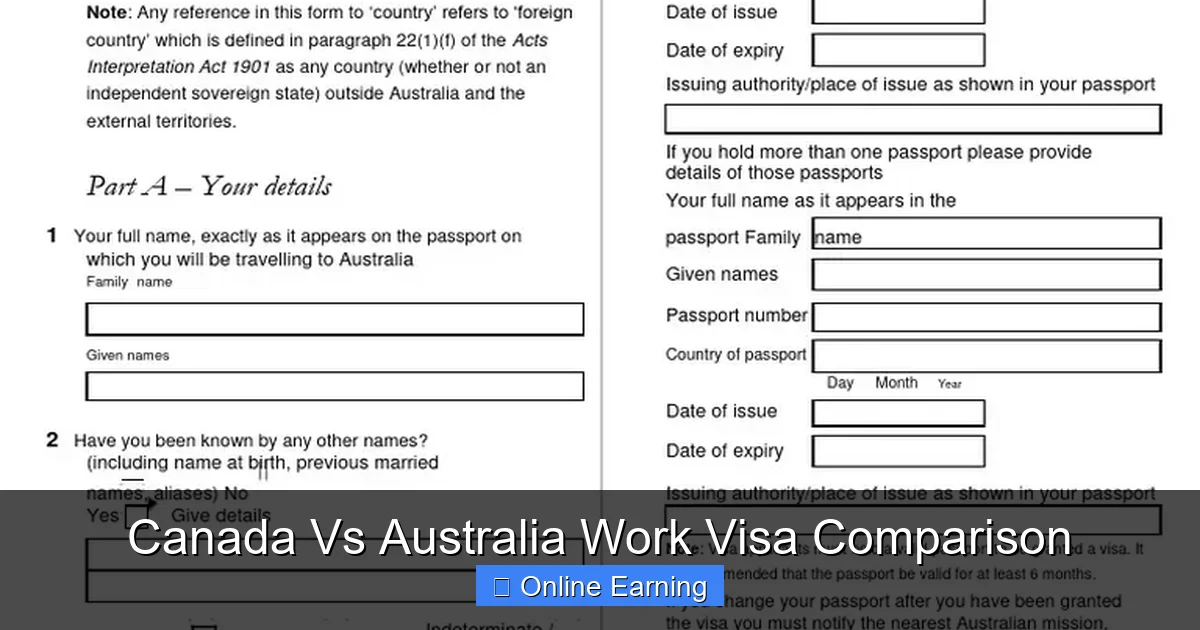
Thinking about working abroad? Both Canada and Australia offer excellent work visa options, but they differ in immigration pathways, job markets, and living costs. While Canada emphasizes points-based immigration and fast-track programs, Australia focuses on skilled occupations and regional incentives. This guide breaks down everything you need to know to choose the right destination for your career and lifestyle goals.
Are you dreaming of working abroad but can’t decide between Canada and Australia? Both countries are top destinations for skilled workers worldwide, offering strong economies, high quality of life, and clear immigration pathways. But which one is truly right for you? This comprehensive comparison will help you understand the key differences between Canada and Australia work visas, so you can make an informed decision that aligns with your career goals and personal preferences.
Whether you’re a recent graduate, a mid-career professional, or someone looking to relocate with family, understanding the nuances of each country’s work visa system is crucial. We’ll explore everything from application requirements and processing times to job markets, cost of living, and pathways to permanent residency. By the end of this article, you’ll have a clear picture of which destination offers the best opportunities for your specific situation.
Key Takeaways
- Canada uses a points-based system for Express Entry, while Australia employs a points-based system for skilled migration with occupation lists.
- Both countries offer permanent residency after working temporarily, but Canada often provides faster pathways to citizenship.
- Australia has stricter English requirements with IELTS scores, while Canada accepts multiple language tests.
- Job markets differ significantly: Canada favors tech and healthcare, while Australia needs engineers, IT, and trades.
- Cost of living is higher in Australia, especially in cities like Sydney and Melbourne.
- Canada offers better climate diversity and natural beauty, while Australia has unique wildlife and beach culture.
- Processing times vary: Canada’s Express Entry is faster (6 months), while Australia’s skilled migration can take 8-12 months.
📑 Table of Contents
Understanding Work Visa Categories
Before diving into the specifics, it’s important to understand that both Canada and Australia have multiple work visa categories designed for different purposes and skill levels. Neither country offers a single “work visa” – instead, they provide specialized programs for temporary workers, skilled migrants, and international graduates.
Canada’s Temporary Work Visas
Canada’s temporary work visa system includes several popular options:
– **International Mobility Program (IMP)**: For employers seeking foreign workers
– **Temporary Foreign Worker Program (TFWP)**: Requires Labour Market Impact Assessment (LMIA)
– **International Experience Canada (IEC)**: For young professionals aged 18-35
Australia’s Temporary Work Visas
Australia’s temporary work visa framework includes:
– **Temporary Skill Shortage (TSS) visa (subclass 482)**: For skilled workers with job offers
– **Working Holiday visa (subclass 417/462)**: For young adults
– **Skilled Employer Sponsored (SES) visa**: For employer-sponsored workers
Express Entry vs. Skilled Migration System
Visual guide about Canada Vs Australia Work Visa Comparison
Image source: imgv2-1-f.scribdassets.com
One of the most significant differences between Canada and Australia lies in their immigration systems. Canada’s Express Entry is a points-based system that manages applications for three federal economic immigration programs: Federal Skilled Worker Program, Federal Skilled Trades Program, and Canadian Experience Class.
How Express Entry Works
The Express Entry system operates on a three-step process:
1. **Profile Creation**: Applicants create a profile and receive a Comprehensive Ranking System (CRS) score
2. **Ranking**: Candidates are ranked in a pool based on factors like age, education, work experience, and language proficiency
3. **Invitation**: The highest-ranked candidates receive Invitations to Apply (ITAs) for permanent residence
Australia’s Points-Based Skilled Migration
Australia uses a similar points-based system but with different criteria:
– **Skills assessment**: Required for nominated occupations
– **English language proficiency**: Mandatory with specific score requirements
– **Age limit**: Generally under 45 years old
– **Points test**: Based on age, education, work experience, and English skills
Job Market Opportunities
Visual guide about Canada Vs Australia Work Visa Comparison
Image source: geographyhost.com
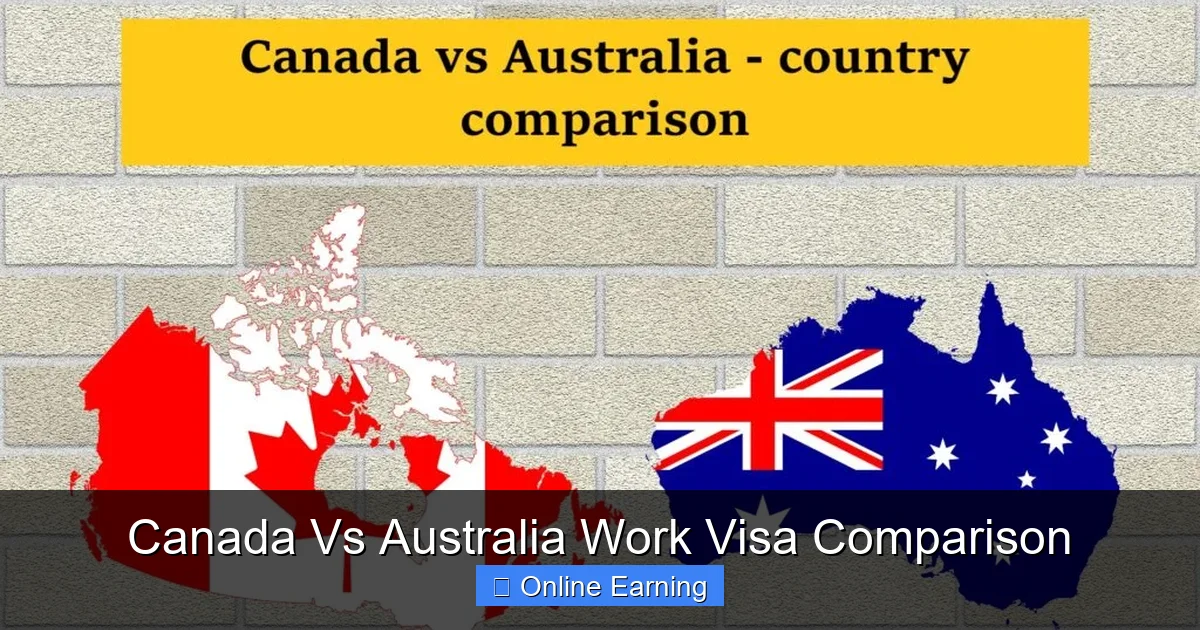
The job markets in both countries are strong, but they favor different industries and skill sets. Understanding these differences can help you target the right opportunities.
Canada’s Strong Sectors
– **Technology**: Toronto, Vancouver, and Montreal are tech hubs with growing startup scenes
– **Healthcare**: High demand for nurses, doctors, and healthcare administrators
– **Engineering**: Strong construction and infrastructure sectors
– **Natural Resources**: Mining and energy industries in Western provinces
Australia’s Key Industries
– **Mining and Resources**: Western Australia is a major mining hub
– **Healthcare and Aged Care**: Aging population creates sustained demand
– **Construction**: Infrastructure projects across major cities
– **Information Technology**: Growing tech sector in Sydney and Melbourne
Salary Comparisons
Average annual salaries (CAD/AUD):
– **Software Developer**: $75,000 CAD / $85,000 AUD
– **Registered Nurse**: $70,000 CAD / $75,000 AUD
– **Civil Engineer**: $80,000 CAD / $85,000 AUD
– **Trades Worker**: $55,000 CAD / $60,000 AUD
Visa Application Requirements
Visual guide about Canada Vs Australia Work Visa Comparison
Image source: physiciansforyou.com
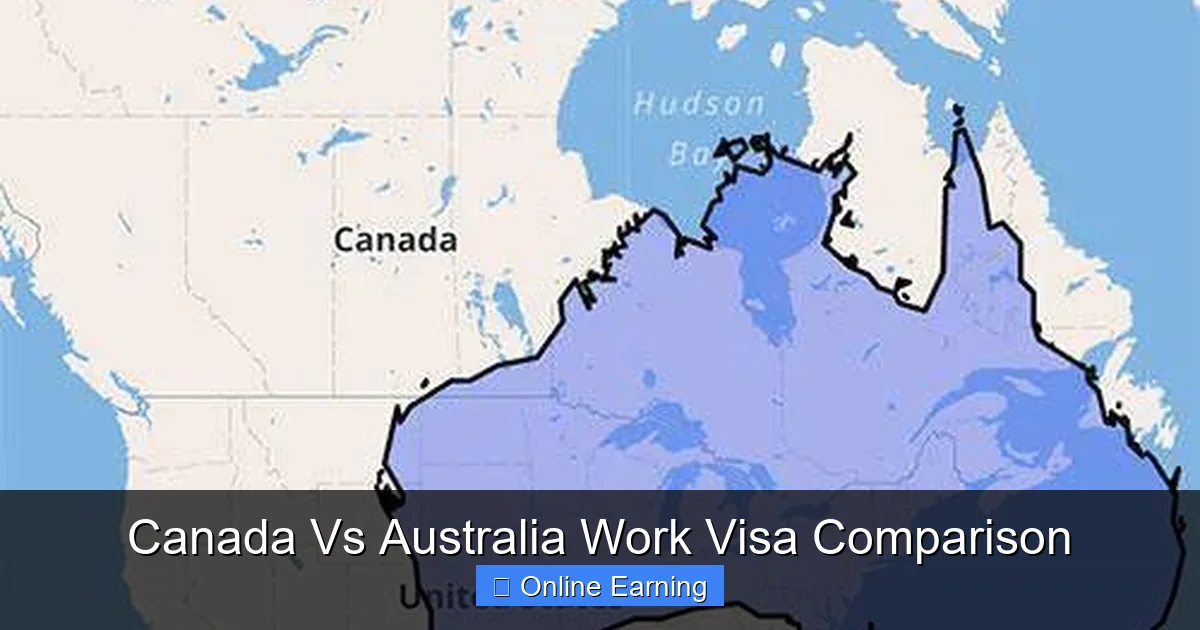
Both countries have rigorous application processes, but the specific requirements differ significantly.
Canada’s Application Process
1. **Language Testing**: IELTS, CELPIP, or TEF Canada accepted
2. **Educational Credential Assessment (ECA)**: Required for foreign qualifications
3. **Job Offer**: Not mandatory but adds significant points
4. **Provincial Nomination**: Optional but provides bonus points
Australia’s Application Process
1. **Skills Assessment**: Required for nominated occupation
2. **English Testing**: IELTS, PTE, or TOEFL accepted with minimum scores
3. **Health and Character Checks**: Standard requirements
4. **State Nomination**: Some states offer additional points for regional migration
Processing Times
– **Canada Express Entry**: 6 months average
– **Australia Skilled Migration**: 8-12 months average
– **Provincial Nominee Programs (PNP)**: Canada – 3-6 months, Australia – 6-9 months
Cost of Living Comparison
While salaries are competitive in both countries, the cost of living can significantly impact your quality of life and savings potential.
Major Cities Comparison
Toronto vs. Sydney:
– Rent (1-bedroom apartment): $2,200 CAD / $3,200 AUD
– Groceries: $150 CAD / $200 AUD monthly
– Transportation: $150 CAD / $200 AUD monthly
– Utilities: $120 CAD / $180 AUD monthly
Regional Differences
– **Canada**: Western provinces (Alberta, BC) generally have lower costs than Eastern provinces
– **Australia**: Regional areas offer lower costs but may have fewer job opportunities
– **Both countries**: Major cities are significantly more expensive than regional areas
Budget Planning Tips
– **Canada**: Consider using public transit in major cities
– **Australia**: Look into shared accommodation options
– **Both**: Research healthcare costs (public systems are generally good but may have wait times)
Pathways to Permanent Residency
Both countries offer clear pathways from temporary to permanent status, but the processes and timelines differ.
Canada’s Permanent Residency Options
– **Express Entry**: Direct pathway to permanent residence
– **Provincial Nominee Program (PNP)**: Provincial nomination leads to permanent status
– **Atlantic Immigration Program**: Streamlined process for Atlantic provinces
– **Rural and Northern Immigration Pilot**: Targets smaller communities
Australia’s Permanent Residency Pathways
– **Skilled Independent visa (subclass 189)**: Points-based permanent visa
– **Skilled Nominated visa (subclass 190)**: State-nominated permanent visa
– **Employer Nomination Scheme (subclass 186)**: Employer-sponsored permanent visa
– **Regional visa options**: Additional pathways for regional areas
Timeline to Citizenship
– **Canada**: 3 years of residency required before applying for citizenship
– **Australia**: 4 years of residency required (1 year as permanent resident)
Quality of Life Comparison
Beyond work opportunities, quality of life factors can significantly impact your decision.
Healthcare Systems
– **Canada**: Universal healthcare through public system
– **Australia**: Medicare provides public healthcare
– **Both**: Private insurance recommended for faster access and additional coverage
Education System
– **Canada**: High-quality public education with tuition fees for international students
– **Australia**: Similar education system with strong research universities
– **Both**: English-speaking environment benefits language development
Climate and Geography
– **Canada**: Cold winters in most regions, diverse landscapes
– **Australia**: Generally mild climate, extensive coastline
– **Both**: Both countries offer excellent outdoor recreation opportunities
Social and Cultural Factors
– **Canada**: Known for multiculturalism and diversity
– **Australia**: Laid-back culture with strong beach lifestyle
– **Both**: Welcoming to immigrants with established communities
Tips for Successful Applications
Based on current trends and successful applicant profiles, here are practical tips for both countries.
Canada Application Tips
– **Start early**: Language testing and credential assessment can take months
– **Maximize points**: Consider taking additional language tests or getting provincial nomination
– **Target in-demand jobs**: Focus on sectors with labor shortages
– **Network strategically**: Connect with Canadian employers through LinkedIn and professional associations
Australia Application Tips
– **Choose the right occupation**: Research current skilled occupation lists
– **Prepare for interviews**: Australian employers often conduct detailed interviews
– **Consider regional migration**: Regional areas offer additional points and better job prospects
– **Understand state requirements**: Each state has different nomination criteria
Common Mistakes to Avoid
– **Incomplete documentation**: Double-check all requirements before applying
– **Poor language scores**: Aim for the highest possible scores
– **Unrealistic expectations**: Research job market conditions thoroughly
– **Last-minute applications**: Allow extra time for processing and appeals
Conclusion
Choosing between Canada and Australia for work and immigration is a significant decision that depends on your individual circumstances, career goals, and personal preferences. Both countries offer excellent opportunities, but they cater to different needs and circumstances.
Canada’s Express Entry system and faster processing times may appeal to those seeking a quicker path to permanent residency. The country’s strong points-based system rewards applicants with higher education, language skills, and job experience. Canada’s diverse provinces offer different lifestyles and economic opportunities, from bustling urban centers to peaceful rural communities.
Australia’s skilled migration system, while taking longer to process, offers robust pathways to permanent residency and citizenship. The country’s focus on skilled occupations and regional incentives provides opportunities for those willing to consider life outside major cities. Australia’s unique lifestyle, strong economy, and beautiful natural environment make it attractive to many international workers.
Ultimately, the best choice depends on your specific situation. Consider factors like your profession, language skills, family situation, and long-term goals. Both countries offer excellent quality of life, strong economies, and clear immigration pathways. Whatever you choose, thorough preparation and realistic expectations will set you up for success in your new home.
Remember that immigration policies and requirements can change, so always check the latest information from official government sources before making your decision. The journey to working and living abroad can be challenging, but with proper planning and the right mindset, it can also be incredibly rewarding.
Frequently Asked Questions
Which country has easier work visa requirements?
Canada generally has slightly more flexible requirements with multiple language test options and faster processing times. However, Australia has clearer occupation lists and structured points systems that some applicants find easier to navigate.
Can I work in both countries with the same profession?
Yes, many professions are recognized in both countries, including IT, healthcare, engineering, and trades. However, specific licensing requirements and recognition processes differ between countries.
Which country offers better job opportunities for my specific field?
This depends on your profession. Research current labor market information for your specific occupation in both countries. Tech and healthcare tend to have strong demand in both, while some trades may be more in demand in Australia’s mining regions.
How long does it take to get permanent residency in each country?
Canada’s Express Entry typically processes applications in 6 months, while Australia’s skilled migration takes 8-12 months. Both countries offer pathways to permanent residency from temporary status.
Can I bring my family members with me?
Yes, both countries allow family members to accompany you as dependents. Spouses and children can typically join through work visas and later transition to permanent residency.
Which country has a higher acceptance rate for work visa applications?
Both countries have competitive application processes with high approval rates for well-prepared applications. Canada’s Express Entry has a higher overall approval rate, while Australia’s system is more selective based on occupation lists.