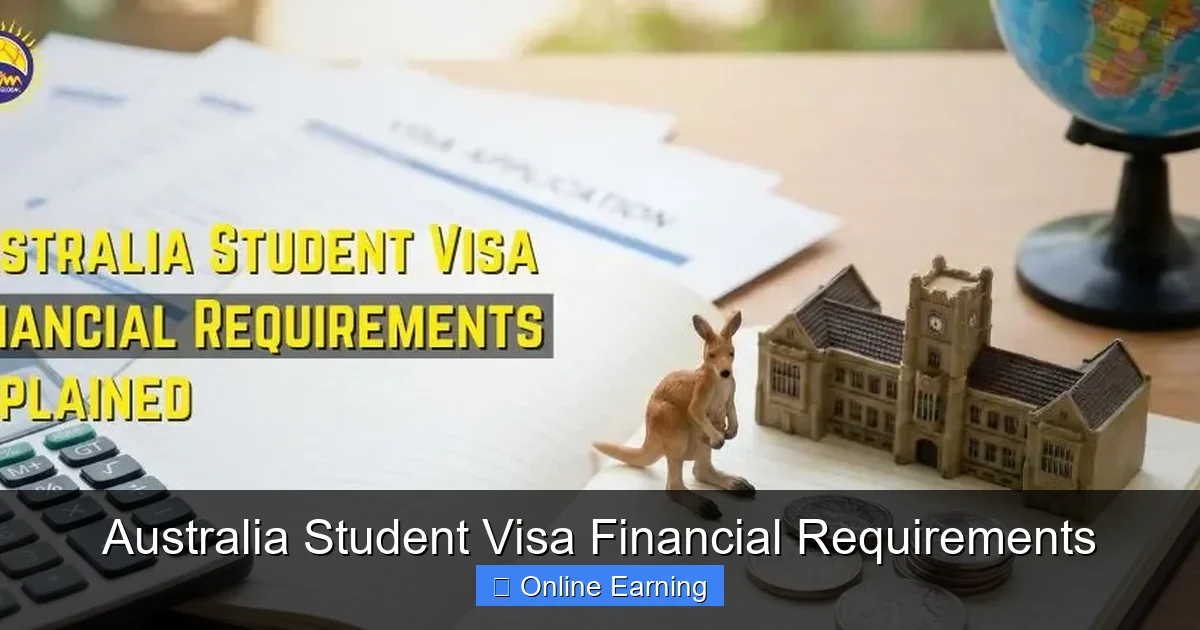
Planning to study in Australia? One of the most important steps is proving you have enough money to cover your living costs. The Australian government sets strict financial requirements to ensure students can support themselves without working illegally. You’ll need to show funds for tuition, living expenses, and travel — and there are specific rules on where the money can come from. This guide walks you through everything you need to know to meet the requirements and get your visa approved.
Key Takeaways
- Tuition Fees: You must prove you can pay your course fees, usually shown by a Confirmation of Enrollment (CoE) from your university.
- Living Expenses: The Department of Home Affairs requires AUD 21,041 per year (as of 2024) for living costs, plus additional amounts for dependents.
- Funds Must Be Liquid: The money must be in your bank account or accessible via a loan, not tied to property or investments.
- Proof of Source: You must provide bank statements, letters from banks, or official loan documents to verify the money.
- Duration of Funds: The money must be held for at least 28 days before your application, and the balance shouldn’t drop too much during that time.
- Dependent Costs: If you bring a spouse or children, extra funds are required — around AUD 7,362 per year for a spouse and AUD 3,152 per child.
- Financial Gaps: If you can’t cover the full amount, you may apply for a financial hardship visa or scholarship, but this isn’t guaranteed.
📑 Table of Contents
- Introduction: Why Financial Proof Matters for Your Australian Student Visa
- How Much Money Do You Need for an Australian Student Visa?
- Where Can Your Funds Come From?
- How to Prove Your Finances: Documents You’ll Need
- How Long Do You Need to Hold the Funds?
- Common Mistakes to Avoid
- Tips to Strengthen Your Financial Application
- Conclusion: You’ve Got This — With the Right Plan
Introduction: Why Financial Proof Matters for Your Australian Student Visa
Dreaming of studying in Australia? The land of kangaroos, stunning coastlines, and world-class universities sounds like the perfect adventure. But before you pack your bags, there’s one crucial step: proving you have enough money to live and study there. That’s where Australia student visa financial requirements come in.
The Australian government takes this seriously. Why? Because they want to make sure international students don’t end up in financial trouble or working illegally just to survive. So, they’ve set clear rules about how much money you need and how you show you have it.
In this guide, we’ll break down everything you need to know about proving your finances for an Australian student visa. From how much money you need to where it can come from, we’ll make it simple, clear, and easy to follow. Whether you’re applying for the first time or just trying to understand the rules, this article will help you get it right.
How Much Money Do You Need for an Australian Student Visa?
Visual guide about Australia Student Visa Financial Requirements
Image source: ausimmi.com.au
The first thing you need to know is: how much money do you actually need? The answer isn’t one-size-fits-all. It depends on several factors, including your course, your location, and whether you have dependents. But the Australian government has set clear minimums.
The Standard Living Cost Requirement
For the 2024–2025 visa application cycle, the Department of Home Affairs requires international students to show they have **AUD 21,041 per year** for living expenses. That’s about **AUD 1,753 per month**. This amount is designed to cover basic needs like food, rent, transportation, and personal items.
For example, if you’re studying for one year, you’ll need to show at least AUD 21,041. If your course is two years long, you’ll need AUD 42,082 — and so on.
Additional Costs for Dependents
If you’re bringing a spouse or children with you, you’ll need more money. Here’s what you must show:
– **Spouse:** AUD 7,362 per year
– **Each child (under 18):** AUD 3,152 per year
So, if you’re married with one child, your total living cost requirement would be:
AUD 21,041 (yourself) + AUD 7,362 (spouse) + AUD 3,152 (child) = **AUD 31,555 per year**
Tuition Fees Are Separate
Important: Tuition fees are **not included** in the living cost amount. You must also prove you can pay your university fees. This is usually shown through a **Confirmation of Enrollment (CoE)** from your institution. The CoE will list your total tuition cost, and you’ll need to show you’ve paid at least the first year or have a plan to pay.
For example, if your course costs AUD 30,000 per year in tuition, you’ll need to show proof of payment or a loan agreement covering that amount.
Regional vs. Urban Areas
While the standard living cost is set nationally, some students may live in cheaper regional areas. However, the government still uses the same AUD 21,041 benchmark — they don’t reduce the requirement based on location. So, even if you live in a small town, you still need to meet the full amount.
Where Can Your Funds Come From?
Visual guide about Australia Student Visa Financial Requirements
Image source: ukvisa.blog
Not all sources of money are accepted. The Australian government wants to see **liquid, accessible funds** — money you can actually use to pay for food, rent, and bills. Here are the accepted sources:
Personal Bank Savings
This is the most common and accepted source. You can use money in your own bank account — whether it’s a savings account, current account, or term deposit. The key is that the funds must be **accessible** and **not tied up** in investments or property.
For example, if you have AUD 50,000 in a savings account, you can use it — as long as it’s not locked in a 5-year term deposit.
Parent or Guardian’s Bank Account
Yes, your parents can help. If your parents or legal guardians provide the funds, they must show:
– A letter of support from them, stating they will fund your studies
– Their bank statements (usually the last 6–12 months)
– Proof of their income (e.g., payslips, tax returns)
The money can be transferred to your account or kept in theirs — but you must show it’s accessible.
Government or Educational Loans
You can use funds from a government-backed education loan, such as those offered by banks like Westpac, ANZ, or Commonwealth Bank. These loans are specifically for international students.
You’ll need to provide:
– A loan approval letter
– Proof the loan covers your tuition and living costs
– A repayment schedule (if applicable)
Scholarships and Sponsorships
If you receive a full or partial scholarship, you can use it to meet the financial requirement. You’ll need:
– A formal scholarship letter from the provider
– Details on how much you receive and for how long
– Proof the scholarship covers tuition and/or living expenses
Note: Partial scholarships may not be enough unless combined with other funds.
What’s NOT Accepted?
Avoid these common mistakes:
– **Real estate or property:** You can’t use the value of a house or land.
– **Investment portfolios:** Stocks, shares, or mutual funds aren’t considered liquid.
– **Unverified family support:** A verbal promise from your uncle isn’t enough — it must be documented.
– **Recent large deposits:** If you suddenly deposit AUD 100,000, you’ll need to explain the source (e.g., inheritance, sale of assets).
How to Prove Your Finances: Documents You’ll Need
Visual guide about Australia Student Visa Financial Requirements
Image source: aumglobal.com.au
Once you know how much money you need and where it comes from, the next step is proving it. The Australian visa system is strict about documentation. Here’s what you’ll need:
Bank Statements
You must provide **official bank statements** from the last 6–12 months. These should be:
– Printed on bank letterhead
– Showing your name and account number
– Include all transactions (deposits and withdrawals)
– Clearly show the balance
If the money is in a joint account (e.g., with your parents), all account holders must be listed.
Bank Reference Letter
Some banks issue a **Reference Letter** that confirms:
– The account balance
– That the account is active
– That the funds are accessible
This letter is especially helpful if you have a term deposit or if your bank statements aren’t clear.
Loan or Scholarship Documents
For loans:
– Loan approval letter
– Repayment schedule
– Bank statements showing loan disbursement
For scholarships:
– Official letter from the scholarship provider
– Details of the amount and duration
– Confirmation it covers tuition and living costs
Proof of Income for Sponsors
If your parents are funding you, they must show proof of income:
– Recent payslips (last 3–6 months)
– Tax returns or assessment notices
– Employment contracts
This proves they have the means to support you.
Currency Conversion
If your funds are in a foreign currency (e.g., USD, EUR), you must convert them to AUD using the **official exchange rate** from a recognized financial institution. You’ll need:
– The exchange rate used
– The date of conversion
– A statement showing the original amount and converted amount
How Long Do You Need to Hold the Funds?
The Australian government wants to make sure you’re serious and have stable finances. That’s why they require the money to be **held for at least 28 days** before your visa application.
The 28-Day Rule
This means:
– The funds must be in your account (or accessible) for **28 consecutive days**
– The balance should not drop significantly during this time
– The 28-day period must end within 3 months of your visa application
For example, if you apply on June 1, the funds must be held from at least May 4 to June 1.
Why the 28-Day Rule Matters
This rule prevents people from depositing money just before applying and then spending it. It shows you have a stable financial background.
If your balance drops during the 28 days (e.g., because of a large withdrawal), it could raise red flags. So, avoid spending the money during this period.
What If You Don’t Have 28 Days of History?
If you’re using a new bank account or recently received funds (e.g., inheritance), you may not have 28 days of history. In this case:
– Provide a detailed explanation of the source
– Include supporting documents (e.g., inheritance letter, sale agreement)
– Show the funds have been held for as long as possible
The visa officer will assess whether the funds are genuine and stable.
Common Mistakes to Avoid
Even if you have the money, you can still get your visa rejected if you make mistakes. Here are the most common errors:
Using Unverified Funds
Don’t use money from unknown sources. For example, if your cousin gives you AUD 20,000 as a “gift,” but there’s no documentation, it won’t count. Always have a paper trail.
Last-Minute Deposits
Avoid depositing large amounts just before applying. If you suddenly have AUD 50,000 in your account, the visa officer may question where it came from. Provide a clear history.
Not Including Dependent Costs
If you’re bringing family, forget to add their costs. This is a common error that leads to rejection. Double-check the numbers.
Using Property or Investments
You can’t use the value of a house or car. Only liquid assets count. Convert investments to cash first, or use cash in a bank account.
Ignoring the 28-Day Rule
Applying with funds that haven’t been held long enough is a major red flag. Plan your application timeline carefully.
Not Updating Documents
If you get a scholarship or pay tuition after submitting your application, update your documents. Outdated info can cause delays.
Tips to Strengthen Your Financial Application
Want to make your visa application stronger? Follow these tips:
Start Saving Early
Begin saving as soon as possible. The longer you have funds, the better. Aim to have at least 6–12 months of history before applying.
Use a Reliable Bank
Choose a bank that provides clear, official statements and letters. Some smaller institutions may not meet visa requirements.
Keep Records of All Transactions
Even small deposits or transfers can help explain your financial history. Keep all receipts and bank records.
Get a Loan if Needed
If you don’t have enough savings, consider an education loan. Many banks offer special loans for international students with low interest.
Apply Early
Don’t wait until the last minute. Processing can take weeks, and you’ll need time to gather documents.
Seek Professional Help
If you’re confused, consult an education consultant or immigration agent. They can review your documents and help you avoid mistakes.
Conclusion: You’ve Got This — With the Right Plan
Meeting the Australia student visa financial requirements doesn’t have to be stressful. Yes, the rules are strict, and the documentation can seem overwhelming — but if you plan ahead, gather the right documents, and show stable, accessible funds, you’ll be fine.
Remember: the government isn’t trying to stop you from coming — they just want to make sure you can live and study in Australia without running into trouble. By proving you have the money, you’re showing responsibility and commitment.
So start saving, keep your records in order, and apply with confidence. Your dream of studying in Australia is within reach — as long as you have the financial proof to back it up.
Frequently Asked Questions
How much money do I need to show for an Australian student visa?
You must show AUD 21,041 per year for living expenses, plus tuition fees. If you have dependents, add AUD 7,362 for a spouse and AUD 3,152 per child per year. The funds must be held for 28 days before applying.
Can I use my parents’ bank account for my visa application?
Yes, if your parents provide the funds. They must show bank statements, proof of income, and a letter of support stating they will fund your studies. The money must be accessible.
What documents do I need to prove my finances?
You need official bank statements (last 6–12 months), a bank reference letter, loan approval letters, or scholarship documents. All must show the source and accessibility of the funds.
Can I use a scholarship to meet the financial requirement?
Yes, if the scholarship is from a recognized institution and covers tuition and living costs. You’ll need a formal letter from the provider with details on the amount and duration.
How long do I need to hold the funds before applying?
The funds must be held for at least 28 consecutive days before your visa application. The balance should not drop significantly during this time.
What happens if my visa is rejected due to financial issues?
You can reapply once you meet the requirements. Make sure to address the issues in your first application — such as providing clearer financial proof or holding funds longer.