Getting a visa? Don’t overlook medical insurance—it’s often a mandatory requirement. This checklist ensures you submit the right documents so your application moves smoothly and avoids rejection. From understanding coverage limits to choosing the right policy, we’ve got you covered. With the right preparation, you’ll save time, money, and stress during your visa process.
Key Takeaways
- Medical insurance is a visa requirement in many countries: Countries like Germany, Canada, Australia, and the U.K. often require proof of health coverage for visa applicants.
- Your insurance must meet specific criteria: Coverage limits, duration, and validity periods must align with the visa type and duration of stay.
- Always carry a printed or digital copy: Some consulates require physical documents, while others accept digital submissions.
- Understand the difference between travel and long-term insurance: Short-term travel insurance won’t suffice for student or work visas.
- Check for exclusions and pre-existing conditions: Ensure your policy covers emergency care, hospitalization, and repatriation if needed.
- Apply early to avoid delays: Processing insurance documents can take time—don’t leave it to the last minute.
- Keep a backup copy safe: Store digital and physical copies securely in case of loss or verification needs.
📑 Table of Contents
- Medical Insurance for Visa Application Documents Checklist: What You Need to Know
- Why Medical Insurance Matters for Your Visa
- What Documents Do You Need?
- How to Choose the Right Insurance Policy
- Common Mistakes to Avoid
- How to Submit Your Medical Insurance Documents
- Tips for a Smooth Visa Process
- Conclusion
Medical Insurance for Visa Application Documents Checklist: What You Need to Know
So, you’re planning to move abroad—whether for study, work, or a long-term stay. You’ve filled out your visa application, gathered your passport, and packed your bags. But there’s one crucial piece of the puzzle that many applicants overlook: medical insurance. In fact, without proper health coverage, your visa application could be rejected—even if everything else is perfect.
Medical insurance isn’t just a recommendation; it’s a requirement in many countries. Whether you’re applying for a student visa to study in the UK, a work visa in Canada, or a tourist visa in Australia, consulates want proof that you’re financially protected against unexpected health issues. This guide walks you through everything you need to know about medical insurance for visa application documents checklist—so you can submit a complete, compliant application and focus on the exciting part: your new adventure.
Why Medical Insurance Matters for Your Visa
Imagine arriving in a foreign country, only to be hospitalized for a sudden illness. Without insurance, you could face thousands of dollars in medical bills—or worse, be denied care. That’s why governments require proof of health coverage: to protect public health systems and ensure visitors don’t become a financial burden.
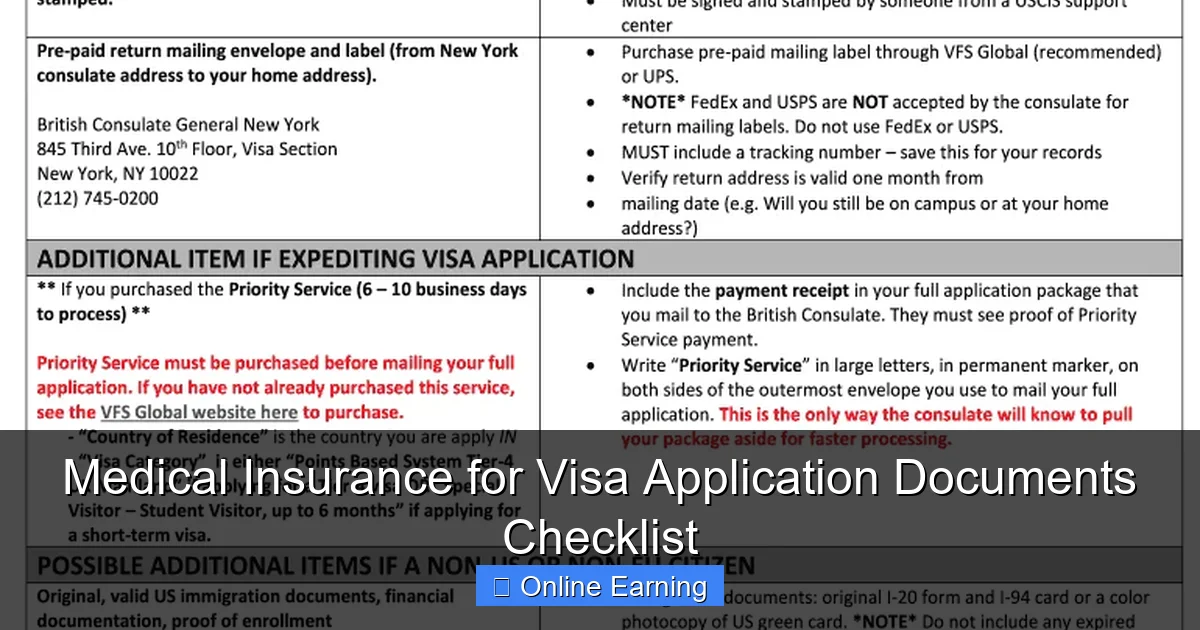
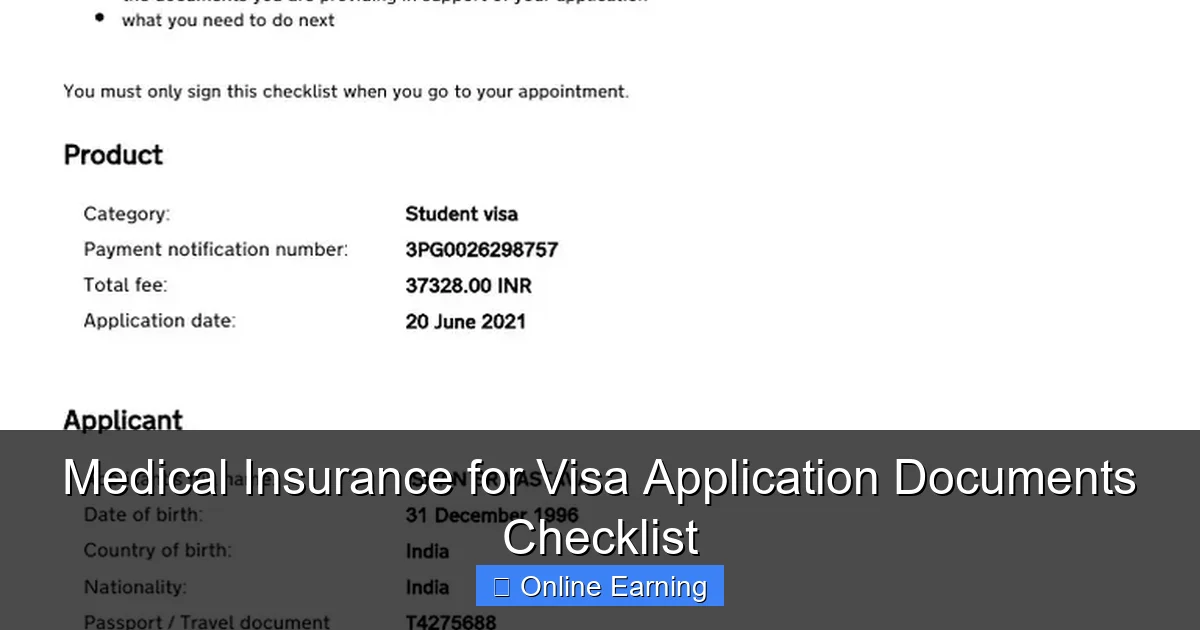
Visual guide about Medical Insurance for Visa Application Documents Checklist
Image source: pdffiller.com
Legal and Financial Protection
For many countries, medical insurance is a legal requirement. For example, Germany requires international students to have health insurance that meets statutory standards. Similarly, Canada’s Express Entry system considers health coverage as part of a complete application. Without it, your visa is likely to be denied.
Financially, insurance protects you from unexpected costs. Emergency surgery, ambulance rides, or even a few days in the hospital can cost tens of thousands of dollars. A solid insurance policy covers these expenses, so you can focus on adjusting to your new life—not worrying about medical debt.
Peace of Mind While Traveling
Even if your destination doesn’t require insurance, it’s always wise to have it. Medical emergencies can happen anywhere. With the right coverage, you’ll have access to quality healthcare without the stress of high bills or language barriers.
What Documents Do You Need?
Now that you understand why medical insurance matters, let’s dive into the medical insurance for visa application documents checklist. The exact documents vary by country and visa type, but here’s a general list of what you’ll typically need:
Visual guide about Medical Insurance for Visa Application Documents Checklist
Image source: image7.slideserve.com
- Insurance Policy Certificate or Letter: A formal document issued by the insurer confirming coverage.
- Coverage Details: Including maximum coverage amount, duration, and geographic scope.
- Policy Number and Insurer Information: So the consulate can verify the policy.
- Validity Period: Must cover the entire duration of your stay.
- Proof of Payment: Some countries require proof that you’ve paid for the insurance.
- Digital or Printed Copy: Depending on the consulate’s requirements.
Example: Germany Student Visa Requirements
For a German student visa, you’ll need a Statutory Health Insurance (Gesetzliche Krankenversicherung) or an Approved Private Insurance (Private Krankenversicherung). The policy must:
- Cover at least €30,000 in medical expenses.
- Be valid for the entire duration of your studies.
- Include coverage for repatriation and emergency care.
You’ll receive a Versicherungsnachweis (insurance certificate) from your provider. This document must be submitted with your visa application.
Example: Canadian Work Visa
For a Canadian work permit, you may need to show proof of medical insurance if you’re staying longer than six months. The policy should:
- Cover emergency medical care, hospitalization, and repatriation.
- Be valid for the entire length of your stay.
- Be issued by a recognized insurer.
Some Canadian provinces, like British Columbia, require specific insurance for foreign workers. Check with the IRCC website for the latest requirements.
How to Choose the Right Insurance Policy
Not all insurance policies are created equal. To meet visa requirements, your policy must be specific, comprehensive, and valid. Here’s how to pick the right one:
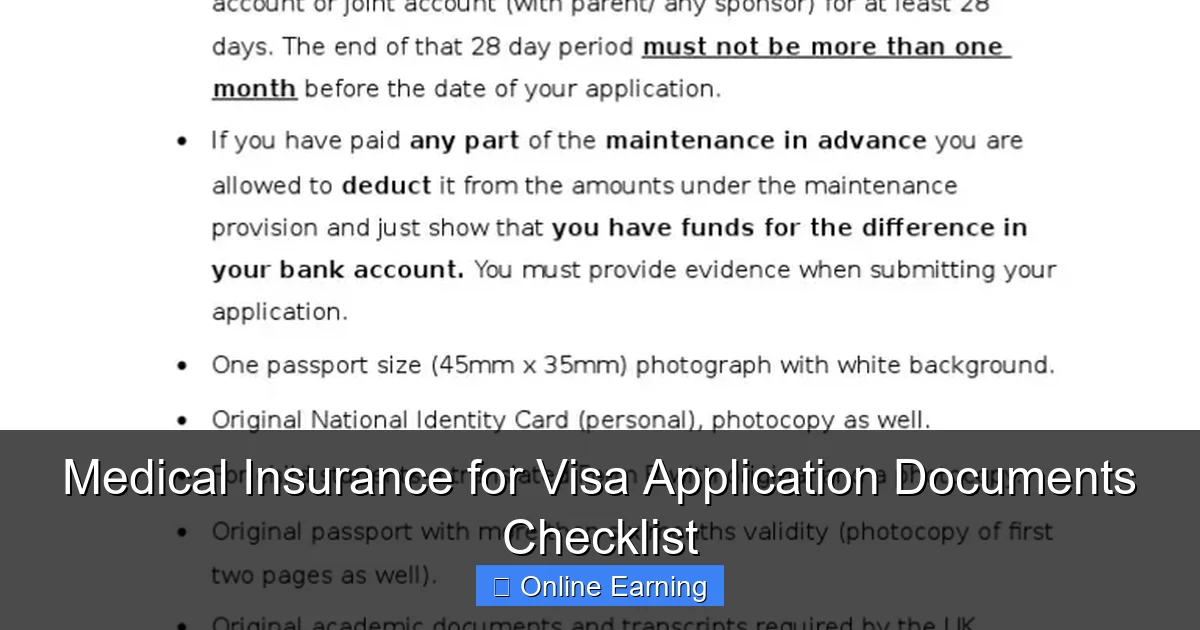
Visual guide about Medical Insurance for Visa Application Documents Checklist
Image source: imgv2-1-f.scribdassets.com
Check Coverage Limits
Most countries require a minimum coverage amount. For example:
- Australia: At least AUD 50,000 for temporary visa holders.
- U.K.: For student visas, coverage must be valid for the entire course duration.
- U.S.: While not required for tourist visas, student visas (F-1) often require health insurance through your school.
Make sure your policy meets or exceeds these limits.
Verify Duration and Validity
Your insurance must be valid for the entire duration of your stay. For instance, if you’re studying for two years, your policy must cover those two years—no gaps allowed.
Also, check the start date. Some policies allow you to begin coverage before your visa is approved, but others require the policy to start after visa issuance. Confirm this with your insurer.
Confirm Geographic Coverage
Some policies only cover your home country or specific regions. For international travel, choose a policy that covers the country you’re visiting—and possibly others if you plan to travel during your stay.
Look for Emergency and Repatriation Coverage
These are essential for long-term stays. Emergency coverage pays for urgent medical care, while repatriation covers the cost of returning home if you’re too ill to continue your trip.
Understand Exclusions
Read the fine print. Many policies exclude pre-existing conditions, cosmetic surgery, or high-risk activities like scuba diving. If you have a chronic condition, look for a policy that covers it—or consider a specialized plan.
Common Mistakes to Avoid
Even experienced travelers make mistakes when preparing their medical insurance documents. Here are the most common pitfalls—and how to avoid them.
Mistake 1: Using Short-Term Travel Insurance
Many people use travel insurance for short trips, but it’s not suitable for long-term visas. Travel insurance typically covers 30–90 days and doesn’t meet the duration or coverage limits required for student or work visas.
Tip: Opt for a long-term health insurance plan designed for expatriates or international students.
Mistake 2: Submitting an Expired Policy
Insurance policies have expiration dates. If your policy expires before your visa is processed or your stay begins, your application may be rejected.
Tip: Renew your policy or extend coverage as needed. Keep digital and printed copies showing the validity period.
Mistake 3: Ignoring Country-Specific Requirements
Each country has its own rules. For example, France requires students to enroll in the CNAM health insurance system, while New Zealand accepts private insurance with a minimum of NZD 400,000 coverage.
Tip: Research the requirements for your destination country well in advance. Visit the official government or embassy website for the most accurate information.
Mistake 4: Not Translating Documents
If your insurance documents are in English but the consulate requires them in another language, you may need a certified translation.
Tip: Use a certified translation service or check if your insurer provides documents in the required language.
Mistake 5: Forgetting to Carry Proof of Coverage
Even after submitting your application, you may be asked to show proof of insurance at the port of entry or during a consulate interview.
Tip: Carry a printed copy and a digital backup on your phone or cloud storage.
How to Submit Your Medical Insurance Documents
Once you have your insurance policy and documents ready, the next step is submission. Here’s how to do it correctly.
Online Submission
Many consulates allow you to upload documents during the online visa application process. Make sure your files are in PDF or JPEG format and under the size limit (usually 5 MB per file).
Tip: Name your files clearly—e.g., “Insurance_Certificate_John_Doe.pdf”—so immigration officers can easily identify them.
Email Submission
Some embassies require you to email documents after submitting your application. Check the visa application portal for instructions.
In-Person Submission
For some countries, you may need to visit the embassy or consulate in person to submit documents. Bring multiple copies and a printed checklist.
Mail Submission
If allowed, send your documents via certified mail with tracking. Include a cover letter listing all items submitted.
Tips for a Smooth Visa Process
To make your visa application as smooth as possible, follow these practical tips:
- Start Early: Begin researching insurance options 2–3 months before your application. Processing can take time.
- Double-Check Requirements: Visit the official embassy website or contact them directly for the latest rules.
- Keep Copies: Store digital and physical copies in separate locations (e.g., email, USB drive, cloud, and printed copy).
- Use Reputable Insurers: Choose companies with good reviews and 24/7 customer support.
- Monitor Your Policy: Set reminders to renew or extend coverage before it expires.
Conclusion
Medical insurance is more than just a piece of paper—it’s your safety net abroad. By following this medical insurance for visa application documents checklist, you’ll ensure your visa application is complete, compliant, and ready for approval. From choosing the right policy to submitting the correct documents, every step matters.
Remember: what seems like a small detail can make or break your visa application. Don’t risk rejection over a missing certificate or an expired policy. Take the time to research, verify, and prepare. With the right insurance in place, you’ll be one step closer to your dream journey.
Safe travels, and good luck with your visa application!
Frequently Asked Questions
What is the minimum coverage required for a German student visa?
Germany requires at least €30,000 in medical coverage. This must be from an approved private insurer or statutory health insurance. The policy must cover the entire duration of your studies and include emergency care and repatriation.
Can I use my home country’s health insurance for a U.S. visa?
No, U.S. student visas (F-1) typically require health insurance through your school. For tourist visas (B-2), insurance isn’t mandatory, but it’s strongly recommended. Check with your school or the U.S. embassy for specific rules.
How long before my visa should I get medical insurance?
Apply for insurance 2–3 months before your visa application. This gives time to receive documents, renew policies, and address any issues. Don’t wait until the last minute.
Do I need medical insurance for a short tourist visa?
It depends on the country. Some, like Australia and New Zealand, require it for stays over 90 days. Others, like the U.S., don’t. Always check the visa requirements for your destination.
Can I change my insurance policy after submitting my visa application?
Yes, but only if the new policy meets the same or better requirements. Notify the consulate if your policy changes, especially if coverage increases or decreases. Keep records of all communications.
What happens if my insurance expires during my stay?
If your policy expires while you’re abroad, you may face fines, deportation, or denial of future visa applications. Always renew before expiration and carry proof of updated coverage.