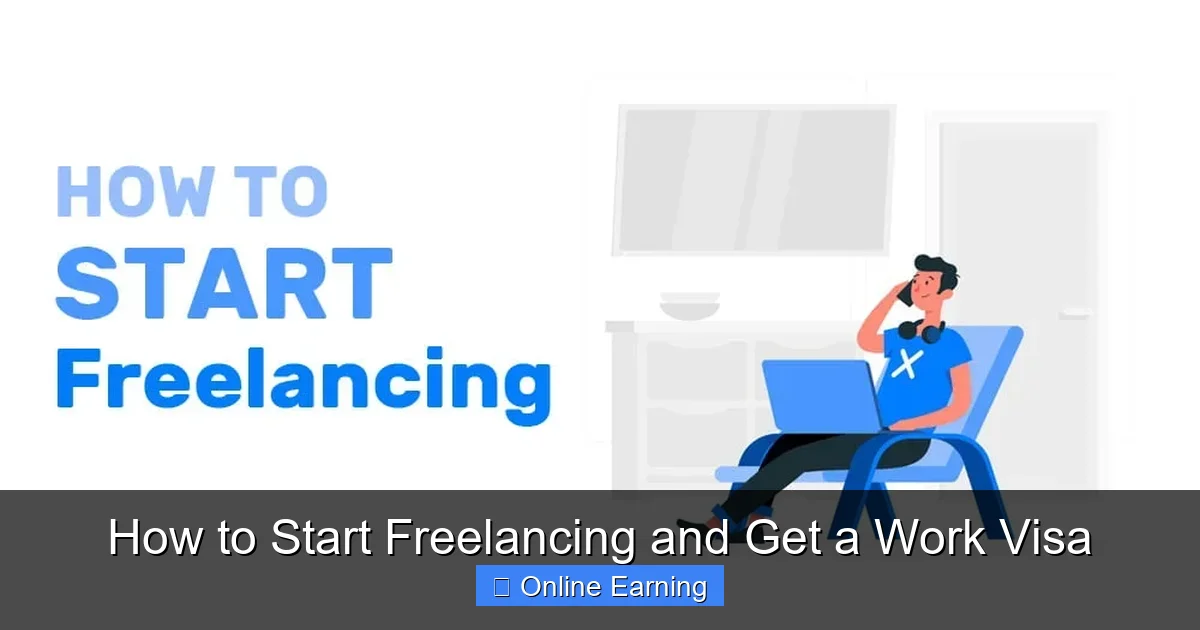
Starting a freelance career and getting a work visa abroad is achievable with the right strategy. This guide walks you through choosing the right platform, building a strong profile, and navigating visa requirements so you can work remotely and live your dream life. Whether you’re a designer, writer, or developer, freelancing opens doors to global opportunities and flexible income.
Key Takeaways
- Choose the right freelance niche: Focus on in-demand skills like web development, graphic design, or content writing to increase your chances of landing clients.
- Build a professional online presence: Create a portfolio website and optimize your profiles on platforms like Upwork, Fiverr, or Toptal.
- Understand visa requirements: Research countries that offer freelancer or digital nomad visas, such as Portugal, Spain, or Estonia.
- Secure stable income: Set competitive rates, maintain consistent work, and diversify your client base to ensure financial stability.
- Stay compliant with local laws: Register as a self-employed individual, pay taxes, and keep records for visa and residency applications.
- Leverage networking and communities: Join online forums, attend virtual events, and connect with other freelancers for support and referrals.
- Plan for long-term residency: Use your freelance income to meet residency thresholds, such as proof of income or health insurance, required by some countries.
📑 Table of Contents
- How to Start Freelancing and Get a Work Visa
- 1. Choosing the Right Freelance Niche
- 2. Building a Strong Freelance Profile and Portfolio
- 3. Finding and Landing Your First Clients
- 4. Setting Up Your Business and Managing Finances
- 5. Applying for a Work Visa or Digital Nomad Visa
- 6. Living and Working as a Freelancer Abroad
- Conclusion: Your Journey to Freelancing and Global Living Starts Now
How to Start Freelancing and Get a Work Visa
Have you ever dreamed of working from a beach in Bali, sipping coffee in a Lisbon café, or living in a cozy apartment in Chiang Mai? For many, the idea of freelancing abroad isn’t just a dream—it’s a realistic path to freedom, flexibility, and financial independence. But how do you actually make it happen?
Freelancing and getting a work visa abroad used to be reserved for tech elites or digital nomads with years of experience. Today, thanks to the global shift toward remote work and digital economies, anyone with the right skills can start. Whether you’re a graphic designer, content writer, software developer, or marketing expert, freelancing allows you to build a global client base and earn income from anywhere. And with countries like Portugal, Spain, and Estonia now offering digital nomad visas, it’s easier than ever to live and work internationally.
In this guide, we’ll walk you through every step—from choosing your freelance niche to securing a work visa. We’ll cover practical tips, real-world examples, and insider advice to help you turn your freelance dreams into reality. Ready to start? Let’s dive in.
1. Choosing the Right Freelance Niche
The first step to starting a successful freelance career is picking a niche you’re passionate about and in which there’s demand. Not all freelance work is created equal—some fields are saturated, while others are booming. The key is to find a balance between your skills, interests, and market demand.
Visual guide about How to Start Freelancing and Get a Work Visa
Image source: getglossytech.com
Popular and In-Demand Freelance Fields
Some of the most profitable and in-demand freelance niches include:
- Web Development and Design: With businesses moving online, there’s constant demand for developers who can build websites, apps, and e-commerce platforms.
- Content Writing and Copywriting: Brands need skilled writers to create blog posts, product descriptions, and marketing copy.
- Graphic Design: Logos, social media graphics, and branding materials are always needed.
- Digital Marketing: SEO, social media management, and email marketing are hot topics.
- Video Editing and Motion Graphics: Video content dominates social media, and creators need help editing and producing.
How to Identify Your Best Niche
To find your ideal freelance niche, ask yourself:
- What skills do I already have?
- What do I enjoy doing?
- Are there clients paying well for this service?
For example, if you love writing and are good at researching, content writing might be your calling. If you’re tech-savvy and enjoy problem-solving, web development could be your path.
Pro Tip: Start with what you know. You don’t need to be an expert right away. Take online courses, build a few sample projects, and gain experience before charging top dollar.
2. Building a Strong Freelance Profile and Portfolio
Your online presence is your digital storefront. If you want clients to hire you, you need to look professional and trustworthy. This starts with a strong profile and a standout portfolio.
Visual guide about How to Start Freelancing and Get a Work Visa
Image source: britishvisa.com.ng
Creating a Winning Freelance Profile
Whether you’re on Upwork, Fiverr, or LinkedIn, your profile should include:
- A clear headline: “Freelance Web Developer | Helping Startups Build Fast, Mobile-Friendly Websites”
- A compelling bio: Share your experience, skills, and what makes you unique.
- Client testimonials: Positive reviews build trust. Ask satisfied clients for feedback.
- Relevant skills: List tools and technologies you use (e.g., WordPress, React, Adobe Creative Suite).
Building a Portfolio That Gets You Hired
Your portfolio is proof that you can deliver results. Include:
- 3–5 high-quality projects with descriptions, screenshots, and links.
- Case studies showing the problem, your solution, and the outcome.
- Before-and-after examples (e.g., a website redesign).
Pro Tip: If you’re just starting, create mock projects for fictional clients. For example, design a website for a local bakery or write a blog series for a tech startup. This shows initiative and creativity.
Creating a Personal Website (Optional but Recommended)
A personal website gives you full control over your brand. It’s also a great way to showcase your work without platform limitations. Use platforms like WordPress, Squarespace, or Wix to build a simple, mobile-friendly site.
Include sections like:
- About Me
- Services
- Portfolio
- Testimonials
- Contact Form
Having a professional website makes you look more credible, especially when applying for visas or pitching to international clients.
3. Finding and Landing Your First Clients
Once your profile and portfolio are ready, it’s time to attract clients. This is often the trickiest part, especially for beginners. But with persistence and smart strategies, you’ll start landing gigs in no time.
Visual guide about How to Start Freelancing and Get a Work Visa
Image source: blog.mentoria.com
Top Platforms to Find Freelance Work
Start with these popular freelance marketplaces:
- Upwork: Great for beginners. Offers a wide range of jobs and has a rating system to build credibility.
- Fiverr: Ideal for offering fixed-price services. Create “gigs” for specific tasks (e.g., “I will write 500 words of SEO blog content”).
- Toptal: A premium platform for top-tier freelancers. High pay, but competitive.
- Freelancer.com: Good for bidding on projects and participating in contests.
Tips for Winning Bids and Proposals
When applying to jobs, stand out with these strategies:
- Customize your proposal: Never send a generic message. Mention the client’s name, company, or specific project details.
- Show you understand the problem: Explain how your skills solve their challenge.
- Include a timeline and budget: Clients want clarity. Say, “I can complete this in 5 days for $400.”
- Offer a free sample: For writing or design gigs, provide a short sample to show your quality.
Networking and Cold Outreach
Don’t rely only on platforms. Reach out to potential clients directly:
- Send LinkedIn messages to small business owners.
- Contact startups on AngelList or Crunchbase.
- Join Facebook groups or Reddit communities (e.g., r/freelance, r/forhire).
Example: If you’re a graphic designer, find a local restaurant that needs a new logo. Send them a message: “Hi [Name], I noticed your website could use a fresh look. I’d love to help redesign your branding—let me know if you’re open to a quick call.”
4. Setting Up Your Business and Managing Finances
Freelancing isn’t just about doing work—it’s running a business. To grow and stay compliant, you need to handle taxes, invoicing, and contracts.
Register as a Self-Employed Individual
In most countries, you must register as a sole proprietor or freelancer. For example:
- In the U.S., you’ll need an EIN and may need to register with your state.
- In the EU, you may need to register with your local tax authority.
Check your country’s small business requirements. Some require a business license, while others are simple to set up.
Create Invoices and Track Income
Use tools like:
- Wave: Free invoicing and accounting for freelancers.
- FreshBooks: Great for time tracking and client management.
- QuickBooks: More advanced, ideal for growing businesses.
Always send professional invoices with:
- Your name and business name
- Client details
- Description of work
- Due date and payment terms
Set Aside Money for Taxes
Freelancers are responsible for their own taxes. Set aside 25–30% of every payment for federal, state, and self-employment taxes. Use a separate savings account for tax payments.
Get Health Insurance
Health insurance is often required for work visas. Consider:
- Short-term international health plans (e.g., SafetyWing, World Nomads).
- Local insurance in your host country (once you move).
5. Applying for a Work Visa or Digital Nomad Visa
Once you’re earning a stable income, it’s time to think about moving abroad. Many countries now offer visas specifically for remote workers and freelancers. These are called digital nomad visas, freelancer visas, or remote work visas.
Popular Countries with Freelancer and Digital Nomad Visas
Here are some top destinations:
- Portugal: Offers a D7 Visa for passive income earners. Requires proof of €7,200/year income.
- Spain: Digital Nomad Visa (up to 2 years) for remote workers earning €2,000/month.
- Estonia: Digital Nomad Visa (1 year) for freelancers and remote employees.
- Barbados: Welcome Stamp (1 year) for remote workers earning $50,000/year.
- Thailand: Thailand Elite Visa (5–20 years) for long-term stays.
What You’ll Need to Apply
Common requirements include:
- Proof of income (bank statements, invoices)
- Health insurance
- Clean criminal record
- Accommodation details
- Passport and application fee
Step-by-Step Visa Application Process
- Research: Visit the official government website of your target country.
- Prepare documents: Gather proof of income, insurance, and identity.
- Apply online or in person: Submit your application and pay the fee.
- Wait for approval: Processing times vary (30–90 days).
- Move and enjoy: Once approved, you can live and work legally.
Tips for a Successful Visa Application
- Start early: Don’t wait until your last minute.
- Be honest: Don’t exaggerate income or job details.
- Use a local address: If possible, have a friend or coworking space provide one.
- Work with an immigration lawyer: Especially if the process is complex.
6. Living and Working as a Freelancer Abroad
Once you’ve landed your visa and moved abroad, it’s time to build your new life. Here’s how to make the most of your international freelance career.
Finding Accommodation and Coworking Spaces
Look for:
- Short-term rentals on Airbnb or local platforms.
- Coworking spaces like WeWork, Hubud (Bali), or Spaces (Europe).
- Digital nomad communities in places like Chiang Mai, Lisbon, or Medellín.
Managing Clients Across Time Zones
Use tools like:
- Calendly: Schedule meetings across time zones.
- Slack or Discord: Stay in touch with clients.
- Time zone converters: Use tools like timeanddate.com.
Pro Tip: Set clear communication expectations. Let clients know your working hours and response time.
Staying Connected and Building a Community
Join online and offline communities:
- Facebook groups like “Digital Nomads Portugal” or “Remote Workers Spain.”
- Meetups and events on Eventbrite or Meetup.com.
- Forums like Nomad List or Remote Year.
Connecting with others helps you find friends, share tips, and even find new clients.
Maintaining Work-Life Balance
Living abroad is exciting, but burnout is real. Set boundaries:
- Work 4–5 hours a day, then enjoy your day.
- Schedule time for hobbies, travel, and relaxation.
- Practice mindfulness or exercise daily.
Conclusion: Your Journey to Freelancing and Global Living Starts Now
Starting a freelance career and getting a work visa abroad is no longer a dream for a lucky few. With the right mindset, skills, and preparation, it’s a realistic and achievable goal for anyone willing to put in the work. From choosing your niche to building a portfolio, finding clients, managing your business, and applying for a visa—each step brings you closer to a life of freedom, flexibility, and adventure.
Freelancing isn’t just about earning money; it’s about designing your life. It’s about waking up in a new city, working on projects you love, and exploring the world without limits. And with countries actively welcoming remote workers, the door to global living is wide open.
So what are you waiting for? Start today. Learn a new skill, build a profile, land your first client, and take the first step toward your international career. The world is your office—go claim it.
Frequently Asked Questions
Can I freelance and live abroad without a work visa?
It depends on your country and the country you’re moving to. Some countries allow short-term stays for remote work, but long-term residency usually requires a visa. Always check local laws to avoid legal issues.
How much money do I need to earn to qualify for a digital nomad visa?
Requirements vary. For example, Portugal’s D7 Visa requires proof of €7,200/year, while Spain’s Digital Nomad Visa needs €2,000/month. Research the specific income threshold for your target country.
Do I need a business license to freelance?
It depends on your country and local regulations. In many places, freelancers can operate as sole proprietors without a formal license, but you may need to register with tax authorities.
Can I work for clients in my home country while living abroad?
Yes, absolutely. Many freelancers work for U.S. or EU clients while living abroad. Just ensure you comply with tax laws in both your home and host countries.
What if my visa application is rejected?
Don’t panic. Review the rejection reason, improve your application (e.g., increase income proof), and reapply. Some countries allow multiple attempts.
Is health insurance required for a freelance visa?
Yes, in most cases. Countries like Portugal, Spain, and Estonia require valid health insurance as part of the visa application. Get a plan before applying.