Finding a country with a simple work visa process can open doors to international careers and higher earnings. In this guide, we explore 9 nations where applying for a work visa is straightforward, fast, and beginner-friendly—no complex paperwork or endless waiting times. Whether you’re a tech professional, teacher, or skilled tradesperson, these countries welcome global talent with open arms and efficient systems.
Have you ever dreamed of working abroad without the headache of complicated paperwork? Maybe you’ve spent hours researching visa requirements, only to find yourself overwhelmed by long wait times, confusing forms, and strict eligibility criteria. Well, you’re not alone. For many skilled professionals—whether in tech, healthcare, education, or trades—the biggest barrier to international work isn’t qualifications or experience, but the visa process itself.
But what if you could land a job overseas and get your visa approved in under two weeks? What if you could apply online, upload your documents, and be done—all from your living room? That’s exactly what’s possible in several countries that have streamlined their work visa systems to attract global talent. These nations recognize that skilled workers are essential to their economies and have made it their mission to make the process as painless as possible.
In this article, we’ll explore nine countries with simple work visa processes that make it easy to start earning abroad. From digital nomad-friendly policies to employer-sponsored fast tracks, these countries offer clear, efficient, and often fast pathways for professionals ready to take the leap. Whether you’re just starting your international career or looking to relocate for better opportunities, these nations could be your next home.
Key Takeaways
- 1. Fast processing times: Several countries process work visas in under 10 days, reducing uncertainty and planning stress.
- 2. Digital application systems: Most of these nations offer online portals, making the process accessible from anywhere in the world.
- 3. No major language barriers: Many accept English proficiency or offer visa programs tailored to English-speaking applicants.
- 4. Employer sponsorship options: In many cases, getting a job offer first makes the visa process much simpler and quicker.
- 5. Affordable or free visa fees: Some countries charge minimal fees or waive costs entirely for certain professions or nationalities.
- 6. Pathways to permanent residency: A simple work visa often leads to long-term stay options, including eventual citizenship.
- 7. Ideal for remote workers: Even digital nomads can benefit from streamlined systems designed to support skilled professionals.
📑 Table of Contents
- 1. Canada: Fast-Track for Skilled Workers
- 2. Germany: Open Doors for Skilled Professionals
- 3. Australia: Fast-Track for Global Talent
- 4. Portugal: The Golden Visa Alternative
- 5. New Zealand: Flexible and Friendly
- 6. Spain: Sun, Sea, and Simplicity
- 7. Estonia: Digital-First and Efficient
- 8. Thailand: Affordable and Flexible
- 9. Mexico: The Hidden Gem
- Conclusion: Your Path to Global Work Starts Here
1. Canada: Fast-Track for Skilled Workers
Canada has long been a top destination for immigrants and skilled workers due to its strong economy, high quality of life, and inclusive immigration policies. One of the reasons it stands out is its simple work visa process for eligible professionals.
The Express Entry System
Canada’s Express Entry system is one of the most efficient ways to obtain a work permit and eventually permanent residency. It’s a points-based system that evaluates candidates based on factors like age, education, work experience, and language proficiency. If you score high enough, you’re invited to apply for permanent residency—often within weeks.
For those who already have a job offer, the process is even simpler. A work permit can be approved in as little as 10 days under the Global Talent Stream, which targets in-demand tech and professional roles.
Digital Nomad and Remote Work Options
While Canada doesn’t have a formal digital nomad visa yet, the International Experience Canada (IEC) program allows young professionals from partner countries to work and travel in Canada for up to two years. This includes the popular “Working Holiday Visa,” which is ideal for remote workers who want to live and work in Canada temporarily.
Tips for Applicants
– Take an approved language test (IELTS or CELPIP) early.
– Have your educational credentials assessed through WES.
– If possible, secure a job offer before applying—it speeds everything up.
Canada’s system rewards preparation and efficiency, making it one of the easiest countries to navigate for skilled workers.
2. Germany: Open Doors for Skilled Professionals
Visual guide about 9 Countries with Simple Work Visa Process
Image source: sernexuss.com
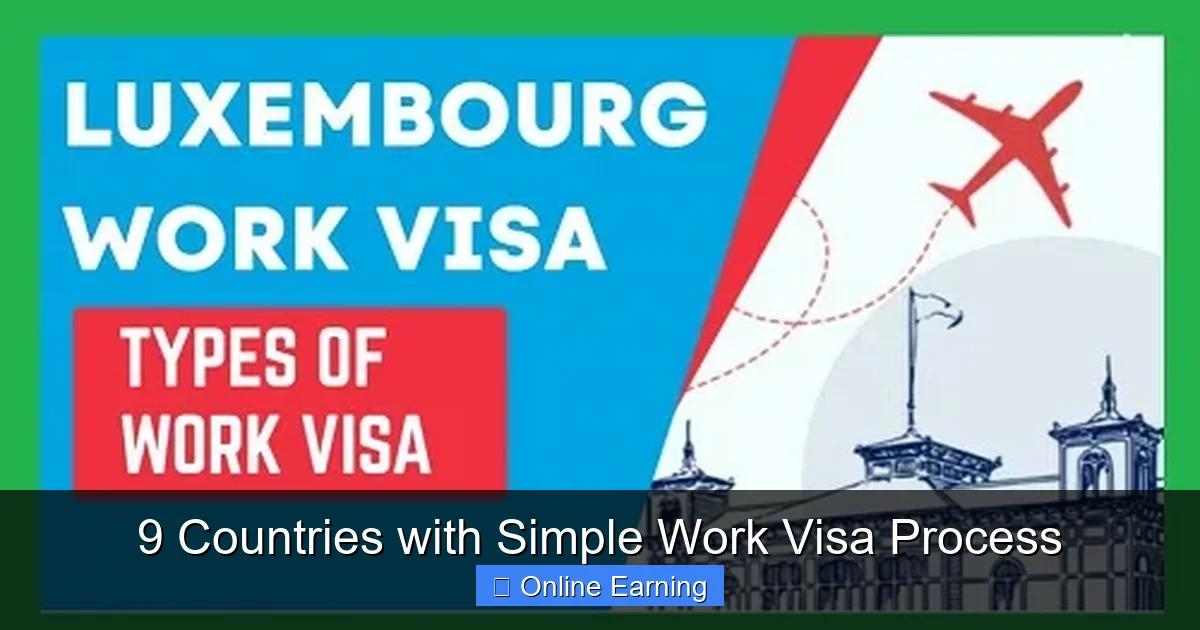
Germany is known for its strong economy, excellent infrastructure, and high demand for skilled labor. The good news? Its work visa process is surprisingly simple and welcoming to international talent.
Job-Seeker Visa: Your Gateway
One of the most beginner-friendly options is Germany’s Job-Seeker Visa, available to non-EU graduates with a university degree. It allows you to stay in Germany for up to six months to look for a job. During this time, you can travel freely and meet potential employers.
If you land a job offer, the employer can sponsor your work visa, which is typically approved within 2–3 weeks. No need to return home—everything can be handled online.
The Skilled Worker Visa
Once you have a job offer, applying for a Skilled Worker Visa is straightforward. You’ll need a degree relevant to the job, proof of language skills (usually B1 in German or English, depending on the role), and a clean criminal record. The visa is valid for up to four years and can lead to permanent residency after two years.
Why Germany Stands Out
– No labor market test required for most professions.
– Free language courses available through public programs.
– High demand in IT, engineering, healthcare, and skilled trades.
Germany’s system is designed to attract talent, not keep it out. With clear steps and strong support, it’s one of the simplest paths to working abroad.
3. Australia: Fast-Track for Global Talent
Visual guide about 9 Countries with Simple Work Visa Process
Image source: visasponsorshipjob.com
Australia is a popular destination for professionals seeking adventure, career growth, and a high standard of living. Its work visa system is well-organized and increasingly digital, making it accessible for applicants worldwide.
The Temporary Skill Shortage (TSS) Visa
The TSS visa is designed for skilled workers with a job offer from an approved Australian employer. There are two subcategories:
– The Short-Term Stream (2 years)
– The Medium-Term Stream (up to 4 years)
Both are processed quickly—usually within 28 days—and can lead to permanent residency through the Employer Nomination Scheme (ENS).
Regional Work Opportunities
Australia offers bonus points for working in regional areas, which often have fewer applicants and faster processing. This is a great option for those willing to live outside major cities like Sydney or Melbourne.
English Language and Skills Assessment
Most professions require an English test (IELTS or PTE) and a skills assessment from a designated authority (e.g., ACS for IT, AIQS for architecture). Once completed, the visa application is simple and online.
Australia’s system rewards initiative and skill, making it a top choice for professionals seeking a balanced lifestyle and career growth.
4. Portugal: The Golden Visa Alternative
Visual guide about 9 Countries with Simple Work Visa Process
Image source: opportunitiesspace.com
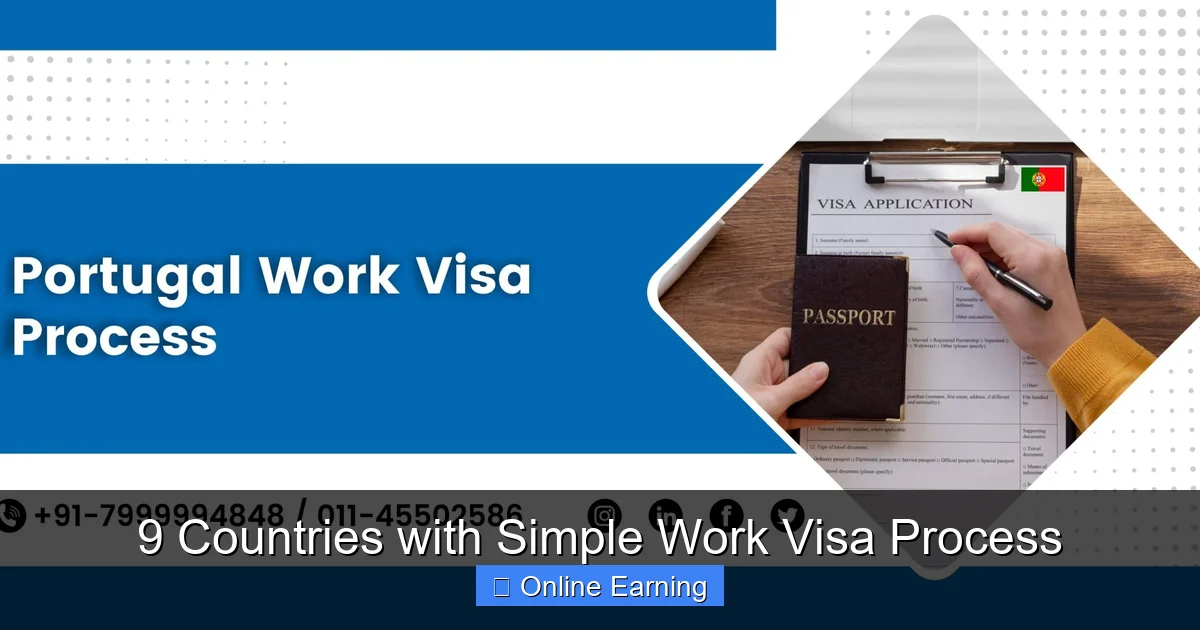
Portugal has become a magnet for digital nomads, retirees, and remote workers thanks to its affordable cost of living, sunny climate, and welcoming immigration policies. While it doesn’t have a formal digital nomad visa, its work visa process is simple and flexible.
Non-Habitual Resident (NHR) Tax Regime
Portugal’s NHR program offers tax benefits to foreign residents, making it financially attractive. Combined with a straightforward work visa process, it’s a smart choice for freelancers and remote workers.
Work Visa for Remote Workers
If you’re employed by a foreign company, you can apply for a Residence Permit for Remote Workers. This visa allows you to live and work in Portugal while employed abroad. It’s valid for one year and renewable.
The application is online, and you’ll need proof of income (usually €2,800/month), health insurance, and a clean criminal record. Processing takes about 60 days.
Path to Citizenship
After five years of legal residence, you can apply for Portuguese citizenship. No need to speak Portuguese at first—many remote workers thrive in English-speaking communities.
Portugal’s simplicity, charm, and digital-friendly policies make it a top contender for those seeking a relaxed yet professional lifestyle.
5. New Zealand: Flexible and Friendly
New Zealand is known for its stunning landscapes and progressive immigration policies. It offers a surprisingly simple work visa process, especially for skilled professionals.
The Essential Skills Work Visa
This visa is for people with a job offer in a role on the Essential Skills List. The employer must prove they couldn’t find a local worker for the job. Once approved, the visa is valid for up to three years and can lead to residency.
Processing time is typically 20 working days.
The Working Holiday Scheme
If you’re under 35 and from a participating country, you can apply for a Working Holiday Visa. This allows you to work and travel in New Zealand for up to 12 months. It’s perfect for remote workers who want to explore the country while earning.
Digital Nomad Visa (Coming Soon)
New Zealand is preparing to launch a digital nomad visa in 2024, which will allow remote workers to live and work in the country for up to two years.
New Zealand’s system is applicant-friendly, with clear guidelines and strong support for skilled workers.
6. Spain: Sun, Sea, and Simplicity
Spain has long been a favorite among expats, and its work visa process is becoming increasingly accessible. With a growing digital nomad community, Spain is making it easier to live and work from its beautiful coastlines and vibrant cities.
Digital Nomad Visa (2023)
Spain launched a Digital Nomad Visa in 2023, allowing remote workers to live in Spain for up to one year (renewable). To qualify, you need to earn at least €2,162/month (€26,000/year) and have health insurance.
The application is online, and processing takes about 20 days. No need for a job offer—just proof of income and remote work status.
Non-Lucrative Visa Alternative
If you don’t want to work in Spain but want to live there, the Non-Lucrative Visa allows you to stay if you have sufficient financial means (€26,000/year). This is popular among freelancers and investors.
Spain’s system is designed to attract talent and creativity, making it one of the simplest countries for remote professionals.
7. Estonia: Digital-First and Efficient
Estonia is a tech-savvy nation that leads the world in e-governance. Its work visa process is fully digital, fast, and designed for modern professionals.
The Digital Nomad Visa
Estonia was one of the first countries to offer a Digital Nomad Visa, allowing remote workers to live in the country for up to one year. You need to earn at least €3,500/month and have health insurance.
The application is submitted online, and approval typically takes 1–2 weeks. You can work for any company, anywhere in the world.
Startup Visa Program
If you’re an entrepreneur, Estonia’s Startup Visa lets you launch a business in the country. You’ll need a business plan, funding (€25,000), and a local partner. The process is fast and digital.
Estonia’s tech-forward approach makes it ideal for IT professionals, developers, and digital entrepreneurs.
8. Thailand: Affordable and Flexible
Thailand is a top destination for digital nomads and remote workers thanks to its low cost of living, tropical climate, and welcoming culture. While it doesn’t have a formal digital nomad visa, its work permit process is simple for certain professionals.
Non-B Visa for Remote Workers
If you’re employed by a foreign company, you can apply for a Non-B Visa. This allows you to stay in Thailand for up to 90 days at a time, with multiple entries. To qualify, you need proof of income (usually $2,000/month) and a job offer.
You’ll need to register with the Ministry of Labour every 90 days to extend your stay.
Work Permit Requirements
Once you have a Non-B visa, you can apply for a Work Permit. You’ll need a Thai employer sponsor, a valid passport, and a background check. Processing takes about 2–3 weeks.
Thailand’s system is flexible and affordable, making it ideal for budget-conscious remote workers.
9. Mexico: The Hidden Gem
Mexico has quietly become a popular destination for North Americans and remote workers seeking affordability, culture, and climate. Its work visa process is simple and accessible.
Temporary Resident Visa
If you earn $2,000/month or more, you can apply for a Temporary Resident Visa. This allows you to live and work in Mexico for up to four years. You can renew it indefinitely.
The application is online or in person at a Mexican consulate. Processing takes about 15–30 days.
Work Permit (No Employer Needed)
Unlike many countries, Mexico allows self-employed professionals to obtain a work permit without a local employer. You’ll need proof of income, health insurance, and a clean record.
Mexico’s proximity to the U.S. and Canada, combined with its simple visa process, makes it a smart choice for professionals seeking a change of scenery.
Conclusion: Your Path to Global Work Starts Here
The days of complicated, time-consuming visa processes are fading fast. Countries around the world are recognizing that skilled workers are the key to economic growth, innovation, and cultural exchange. And they’re making it easier than ever to join them.
Whether you’re a software developer, teacher, healthcare professional, or tradesperson, there’s a country out there with a simple work visa process tailored to your skills and goals. From Canada’s Express Entry to Estonia’s digital nomad visa, these nations offer clear, efficient, and often fast pathways to working abroad.
The key is preparation. Research your target country, gather your documents, and take the first step. With the right mindset and a little planning, you can turn your international career dreams into reality—without the stress.
So why wait? Explore these nine countries, choose the one that fits your lifestyle and profession, and start your journey today. The world is waiting for your skills.
Frequently Asked Questions
Which country has the easiest work visa process?
Estonia and Canada are among the easiest, with fully digital applications and fast processing times. Estonia’s Digital Nomad Visa can be approved in under two weeks, while Canada’s Express Entry often issues invitations within days.
Do I need a job offer to apply for a work visa?
Not always. Countries like Germany offer Job-Seeker Visas for graduates, and digital nomad visas (like Spain’s or Estonia’s) don’t require a local employer. However, a job offer usually speeds up the process.
How much money do I need to work abroad?
Requirements vary. For example, Spain’s Digital Nomad Visa requires €26,000/year, while Thailand only needs $2,000/month. Always check the specific income threshold for your target country.
Can I work remotely while on a work visa?
Yes, in many cases. Countries like Portugal, Spain, and Estonia offer visas specifically for remote workers. Just ensure your visa allows self-employment or freelance work.
How long does it take to get a work visa?
It depends on the country and type of visa. Some, like Estonia’s Digital Nomad Visa, take 1–2 weeks. Others, like Australia’s TSS visa, take about 28 days. Canada’s Global Talent Stream processes in under 10 days.
Can I eventually get permanent residency?
Yes, in most of these countries. For example, Canada’s Express Entry leads to permanent residency, as does Germany’s Skilled Worker Visa. Australia’s TSS can also lead to long-term stay options.