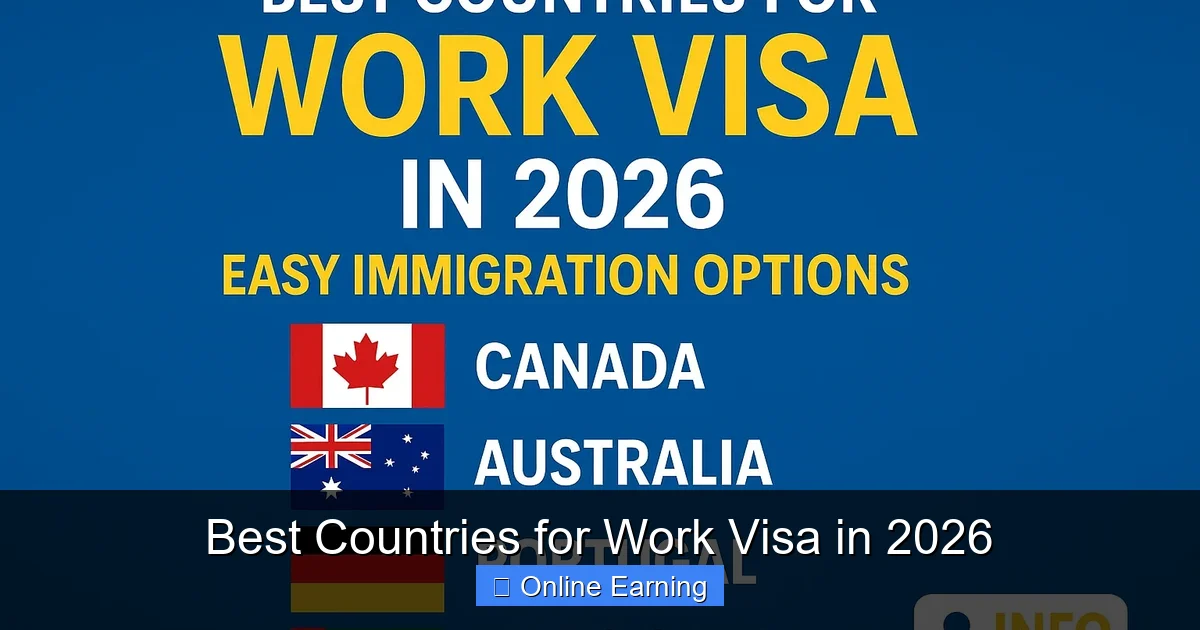
Planning to work abroad in 2026? The best countries for work visa offer strong economies, in-demand jobs, and digital nomad-friendly policies. Whether you’re a tech expert, healthcare professional, or creative freelancer, these nations make it easier to live, work, and earn online from anywhere.
Key Takeaways
- Canada leads in immigration-friendly policies: With a streamlined Express Entry system and high demand for tech and healthcare workers, Canada remains a top destination for work visa seekers in 2026.
- Germany offers EU-wide opportunities: Known for its strong economy and need for engineers and IT professionals, Germany provides long-term residency paths and excellent work-life balance.
- Australia prioritizes skilled migrants: The Skilled Independent Visa (subclass 189) and Temporary Skill Shortage (TSS) visa make Australia ideal for those in healthcare, IT, and trades.
- Singapore attracts global talent: With fast visa processing and a booming fintech and startup scene, Singapore is perfect for digital nomads and entrepreneurs.
- New Zealand embraces remote work: The Working Holiday Visa and Essential Skills Work Visa support flexible careers and online earning through freelancing and remote gigs.
- USA remains competitive: Despite strict quotas, H-1B visa holders and EB-2/EB-3 green card applicants still find opportunities in Silicon Valley and other tech hubs.
- Online earning is easier abroad: Countries with digital nomad visas and strong internet infrastructure allow freelancers to work remotely and earn in foreign currencies.
📑 Table of Contents
- Best Countries for Work Visa in 2026: Your Roadmap to Global Opportunities
- Why Work Visa Countries Matter in 2026
- Canada: The Immigration Champion of 2026
- Germany: Europe’s Tech Powerhouse
- Australia: A Skilled Migrant’s Paradise
- Singapore: The Gateway to Asia
- New Zealand: The Remote Work Nation
- USA: Still a Top Destination, But Competitive
- How to Choose the Best Work Visa Country for You
- Final Thoughts: Your Global Career Starts Now
Best Countries for Work Visa in 2026: Your Roadmap to Global Opportunities
Are you dreaming of working abroad while earning in a strong foreign currency? Whether you’re a software developer, marketing expert, or healthcare professional, the right country can make all the difference. In 2026, the global job market is more open than ever—especially for skilled workers willing to relocate. But with so many options, how do you choose the best country for your work visa?
Let’s face it: getting a work visa isn’t just about paperwork. It’s about finding a place that values your skills, offers a high quality of life, and supports your long-term goals—whether that’s building a career, starting a business, or earning online from anywhere. That’s why we’ve put together this guide to the best countries for work visa in 2026. From fast-track immigration programs to digital nomad-friendly policies, these nations are leading the way in welcoming global talent.
Why Work Visa Countries Matter in 2026
The world is changing fast. Remote work is no longer the exception—it’s the norm. With high-speed internet, cloud tools, and freelance platforms like Upwork and Fiverr, you can earn a living from almost anywhere. But to truly thrive, you need more than a laptop. You need a stable legal status, access to healthcare, and the freedom to move between countries if needed.

Visual guide about Best Countries for Work Visa in 2026
Image source: visa.chakrirpatrika.com
That’s where work visa countries come in. These are nations that actively recruit international talent, offer transparent application processes, and provide pathways to permanent residency or citizenship. In 2026, top destinations are even more welcoming, thanks to labor shortages in key industries and a push toward digital transformation.
Canada: The Immigration Champion of 2026
A Welcoming Gateway for Skilled Workers
When it comes to best countries for work visa in 2026, Canada consistently ranks at the top. The country has made it easier than ever for skilled professionals to immigrate, thanks to programs like Express Entry and Provincial Nominee Programs (PNPs). In 2026, Canada is on track to welcome over 485,000 new permanent residents—the highest number in its history.

Visual guide about Best Countries for Work Visa in 2026
Image source: en.jobcircularpro.com
Express Entry is the backbone of Canada’s immigration system. It’s a points-based system that evaluates candidates based on age, education, work experience, language skills, and adaptability. If you’re a software engineer, data scientist, or nurse, you could qualify for a Canadian work visa within months.
Fast-Track Options for High-Demand Jobs
Canada is facing a shortage of workers in tech, healthcare, and skilled trades. That means faster processing times and more opportunities. For example, the Tech Pilot program fast-tracks applications for IT professionals in provinces like British Columbia and Ontario.
Imagine landing a job offer from a Toronto-based startup, getting your work permit approved in 30 days, and moving in before the winter snows. That’s the reality for thousands of foreign workers in Canada today. Plus, once you’ve lived and worked in Canada for a few years, you’re eligible for permanent residency—opening doors to citizenship down the line.
Living and Earning in Canada
Canada offers a high standard of living, universal healthcare, and strong social services. Cities like Toronto, Vancouver, and Montreal are hubs for tech startups, AI research, and digital innovation. As a remote worker, you can earn in CAD, save on taxes, and enjoy a balanced lifestyle.
Pro tip: If you’re freelancing or running an online business, Canada’s tax system allows you to deduct business expenses. Plus, with low interest rates and affordable housing in smaller cities, you can stretch your income further.
Germany: Europe’s Tech Powerhouse
Why Germany Is a Top Work Visa Destination
If you’re looking for best countries for work visa in 2026, don’t overlook Germany. With its strong economy, low unemployment, and booming tech sector, Germany is a magnet for international talent. In 2023, Germany issued over 300,000 work visas—a number that’s expected to grow in 2026 as the country invests in digital infrastructure and green energy.

Visual guide about Best Countries for Work Visa in 2026
Image source: daadscholarship.com
Germany’s Blue Card program is one of the most attractive work visa options in Europe. Designed for highly skilled non-EU workers, it allows you to live and work in Germany with minimal restrictions. You only need a job offer with a salary of at least €58,400 (or €45,552 in shortage occupations like IT and engineering).
Fast-Track Visa Processing and EU Freedom
One of the biggest perks of a German work visa is that it gives you access to the entire European Union. Once you’re in Germany, you can live, work, or travel freely across 27 countries. That makes Germany a strategic base for digital nomads and online entrepreneurs.
Visa processing times have improved significantly. In 2026, you can expect approval within 4–6 weeks if you apply through the Germany Job Seeker Visa—a special visa that allows you to enter Germany to search for a job without an initial offer.
Living and Earning in Germany
Germany offers excellent work-life balance, affordable healthcare, and strong labor rights. Cities like Berlin, Munich, and Frankfurt are tech hubs with high demand for software developers, data analysts, and cybersecurity experts.
As a remote worker, you can earn in euros, benefit from low corporate taxes for startups, and enjoy a generous vacation policy. Plus, Germany’s public transportation system is world-class, and many cities are car-free zones.
Australia: A Skilled Migrant’s Paradise
The Skilled Independent Visa (Subclass 189)
Australia is another standout among best countries for work visa in 2026. With its stunning landscapes, multicultural cities, and growing economy, Australia attracts professionals from around the globe. The Skilled Independent Visa (subclass 189) is perfect for those who want to live and work anywhere in Australia without a job offer.
This visa is points-based, similar to Canada’s system. You’ll need at least 65 points to qualify, based on factors like age, English proficiency, work experience, and education. If you’re under 35, have a degree, and speak English fluently, you’re in a strong position.
Temporary Skill Shortage (TSS) Visa
For those who prefer to start with a job offer, Australia’s Temporary Skill Shortage (TSS) visa is a great option. It’s valid for up to four years and can lead to permanent residency. High-demand fields include IT, healthcare, engineering, and hospitality.
For example, a nurse from the Philippines can apply for a TSS visa, work in Sydney or Melbourne, and later transition to permanent residency through the Skilled Migrant Program.
Living and Earning in Australia
Australia offers a high quality of life, excellent healthcare, and a strong job market. Cities like Sydney, Brisbane, and Perth are tech and finance hubs with high salaries and low crime rates.
As a remote worker, you can earn in AUD, take advantage of Australia’s tax-free zones (like the Northern Territory), and enjoy outdoor lifestyles year-round. Plus, with a digital nomad visa on the horizon, Australia is becoming even more attractive to freelancers.
Singapore: The Gateway to Asia
Why Singapore Is a Top Work Visa Destination
Singapore is often overlooked, but it’s one of the best countries for work visa in 2026 for tech professionals, entrepreneurs, and digital nomads. With a GDP per capita of over $70,000, Singapore is a financial and tech powerhouse. It’s also known for its low corruption, political stability, and business-friendly policies.
The Employment Pass (EP) is Singapore’s main work visa for foreign professionals. To qualify, you need a job offer with a monthly salary of at least SGD 5,600 (about $4,200). If you’re under 35, have a bachelor’s degree, and work in IT, finance, or engineering, you’re a strong candidate.
Fast-Track for Entrepreneurs and Investors
Singapore also offers the EntrePass, a visa for startup founders and investors. If you have a business plan, SGD 50,000 in funding, and a local partner, you can set up a company and work in Singapore in just a few months.
This makes Singapore a hotspot for online entrepreneurs. You can run an e-commerce store, offer digital marketing services, or build a SaaS product—all while living in one of Asia’s most livable cities.
Living and Earning in Singapore
Singapore offers high salaries, excellent public transport, and a clean, safe environment. As a remote worker, you can earn in SGD, enjoy tax benefits (like no capital gains tax), and access world-class healthcare.
Pro tip: Singapore has a strong startup ecosystem. With co-working spaces, accelerators, and government grants, it’s easy to turn your online business into a local success.
New Zealand: The Remote Work Nation
The Working Holiday Visa
New Zealand is a hidden gem among best countries for work visa in 2026. With its stunning nature, low population density, and tech-friendly policies, it’s perfect for digital nomads. The Working Holiday Visa (WHV) allows young adults (18–30) from over 40 countries to live and work in New Zealand for up to 12 months—with the option to extend.
This visa is ideal for freelancers, writers, designers, and online teachers. You can work in hospitality, tech, or remote gigs while exploring New Zealand’s beaches, mountains, and cities.
The Essential Skills Work Visa
For longer-term stays, the Essential Skills Work Visa is a great option. It’s based on labor market needs and allows you to work in roles where there’s a shortage of local workers. High-demand fields include IT, healthcare, and education.
New Zealand is also piloting a Digital Nomad Visa, expected to launch in 2026. This will allow remote workers to stay and work in New Zealand for up to two years.
Living and Earning in New Zealand
New Zealand offers a relaxed lifestyle, low crime, and excellent work-life balance. As a remote worker, you can earn in NZD, enjoy low taxes, and access free healthcare under the public system.
Pro tip: New Zealand has a strong culture of innovation. With government support for startups and a growing fintech scene, it’s a great place to launch an online business.
USA: Still a Top Destination, But Competitive
The H-1B Visa and Green Cards
Despite stricter quotas, the USA remains a top choice for many professionals. The H-1B visa is for specialty occupations like IT, engineering, and finance. Each year, 85,000 visas are allocated through a lottery system—making it highly competitive.
If you’re selected, you can work in the US for up to six years. After three years, you may be eligible for permanent residency through the EB-2 or EB-3 green card categories.
State-Specific Visa Programs
Some states, like Texas and Florida, have started offering their own visa programs to attract remote workers. For example, Florida’s Remote Worker Visa allows digital nomads to live and work in the state for up to one year.
Living and Earning in the USA
The US offers high salaries, innovation hubs, and a strong economy. Cities like Austin, San Francisco, and Miami are tech and startup hotspots.
As a remote worker, you can earn in USD, access top-tier healthcare, and enjoy cultural diversity. But be prepared for higher taxes and longer processing times for visas.
How to Choose the Best Work Visa Country for You
So how do you pick the right country? Start by asking yourself:
- What skills do I have that are in demand?
- Do I prefer urban life or nature?
- How important is language to me?
- Can I afford the application fees and living costs?
- Do I want to eventually settle permanently?
For example, if you’re a software developer, Canada and Germany offer fast-track visas and strong tech scenes. If you’re a freelancer, New Zealand and Singapore are more flexible. If you want to start a business, Singapore and the USA are ideal.
Final Thoughts: Your Global Career Starts Now
The best countries for work visa in 2026 are not just about paperwork—they’re about opportunity. Whether you’re earning online, building a startup, or advancing your career, these nations are ready to welcome you.
Start by researching visa requirements, preparing your documents, and networking with professionals in your field. Use platforms like LinkedIn, Meetup, and remote job boards to connect with employers abroad.
Remember: the world is your office. With the right visa and a strong skill set, you can live, work, and earn from anywhere in 2026 and beyond.
Frequently Asked Questions
Which country has the easiest work visa in 2026?
New Zealand and Canada are among the easiest, with fast processing and flexible policies. New Zealand’s Working Holiday Visa requires no job offer, while Canada’s Express Entry system is points-based and transparent.
Can I work remotely while on a work visa?
Yes, many countries allow remote work. Canada, Germany, and New Zealand are especially friendly to digital nomads. Some, like Singapore, even offer digital nomad visas.
What jobs are in high demand for work visas in 2026?
Top in-demand jobs include software developers, data scientists, nurses, engineers, and IT specialists. Healthcare and tech industries are growing fast globally.
How long does it take to get a work visa?
Processing times vary. Canada and Germany take 2–6 months. Australia and Singapore are faster, often 1–3 months. New Zealand’s Working Holiday Visa can be approved in days.
Can I bring my family on a work visa?
Yes, most work visas allow dependents. Canada, Germany, and Australia offer family reunification. Spouses can often work, and children can attend school.
Is it possible to get permanent residency through a work visa?
Absolutely. Countries like Canada, Australia, and Germany offer pathways to permanent residency after living and working for a few years. Some, like Canada, even lead directly to citizenship.