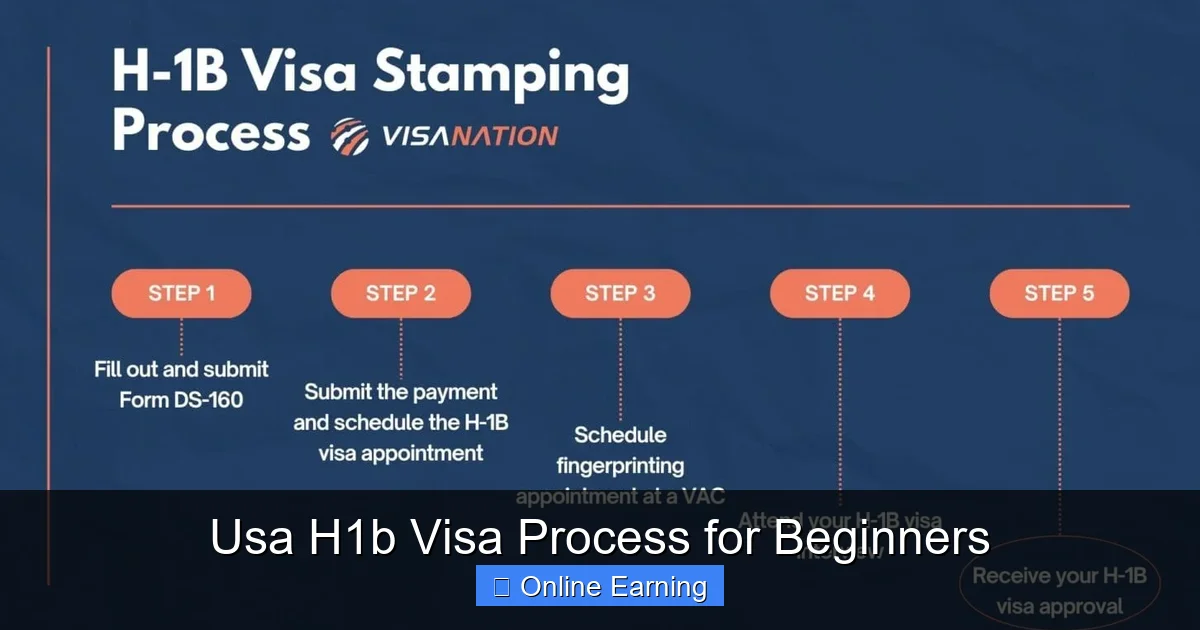
The H1B visa is your gateway to working legally in the United States as a skilled professional. For beginners, understanding the process—from eligibility to approval—can feel overwhelming, but breaking it down makes it manageable. This guide walks you through each stage, offering practical tips and real-world examples to help you navigate the H1B visa process with confidence.
Key Takeaways
- Eligibility matters: You must have a job offer from a US employer, a bachelor’s degree or higher, and the role must qualify as a specialty occupation.
- The H1B lottery is competitive: Only 85,000 visas are available annually, and applications are selected by random draw.
- Timing is everything: The H1B cap opens on April 1 and closes when the cap is reached, often within days.
- Employer sponsorship is required: Only US employers can file H1B petitions on your behalf—self-petitioning is not allowed.
- Premium processing speeds up approval: Pay an extra fee to get a decision within 15 calendar days.
- Portability allows job changes: If your H1B is approved, you can switch jobs without reapplying, as long as the new employer files a new petition.
- Extensions and conversions are possible: You can extend your H1B beyond the six-year limit in certain cases or convert to other visa types like green card or L1.
📑 Table of Contents
- Introduction: Your First Step Toward a US Career
- What Is an H1B Visa and Who Can Apply?
- The H1B Lottery: Why Timing and Strategy Matter
- Step-by-Step: The H1B Visa Application Process
- H1B Visa Fees and Costs: What You Need to Pay
- H1B Visa Validity and Extensions
- H1B to Green Card: Your Path to Permanent Residency
- Common Mistakes to Avoid
- Conclusion: Your H1B Journey Starts Now
Introduction: Your First Step Toward a US Career
So, you’ve got your degree, maybe a few internships under your belt, and now you’re dreaming of working in the United States. But how do you get there? For many international graduates and professionals, the USA H1B visa process is the golden ticket to turning that dream into reality. It’s a pathway that allows skilled workers in fields like IT, engineering, finance, and medicine to live and work legally in the U.S.
But let’s be real—the H1B process can feel like navigating a maze blindfolded. From understanding eligibility to surviving the infamous lottery, there’s a lot to unpack. That’s why this guide is here: to simplify things. Whether you’re a recent graduate or an experienced professional looking to relocate, we’ll walk you through each step, explain the jargon, and give you practical tips to increase your chances of success.
Think of this article as your personal roadmap. We’ll cover everything from who can apply and how the lottery works to what happens after you get approved. By the end, you’ll not only understand the H1B process but also feel empowered to take action. Ready? Let’s dive in.
What Is an H1B Visa and Who Can Apply?
The H1B visa is a non-immigrant work visa that allows U.S. employers to temporarily employ foreign workers in specialty occupations. These are roles that typically require specialized knowledge and a bachelor’s degree or higher. Think software engineers, data scientists, architects, and financial analysts—basically, jobs that demand expertise and formal education.
Visual guide about Usa H1b Visa Process for Beginners
Image source: studythen.com
Eligibility Requirements
To qualify for an H1B visa, you must meet several key criteria:
- Specialty Occupation: The job you’re being hired for must require at least a bachelor’s degree or its equivalent in a specific field.
- Educational Qualification: You must possess a U.S. bachelor’s degree or higher, or a foreign degree evaluated as equivalent.
- Valid Job Offer: A U.S. employer must sponsor you and file a petition on your behalf.
- Cap Exemption (Optional):strong>: Some roles, like those at universities or non-profits, are exempt from the annual cap.
For example, if you’re a computer science graduate with a job offer from a tech company in Silicon Valley, you’re likely eligible. But if you’re applying for a role like “office assistant” or “general laborer,” it probably won’t qualify as a specialty occupation.
Degree Evaluation
If your degree is from outside the U.S., you’ll need to have it evaluated by a credentialing agency. This ensures your education meets U.S. standards. Popular services include SpanTran, WES, and ECE. Most employers or lawyers will handle this for you, but it’s good to know the process.
The H1B Lottery: Why Timing and Strategy Matter
One of the most confusing parts of the H1B process is the lottery. Every year, the U.S. Citizenship and Immigration Services (USCIS) receives far more petitions than the 85,000 H1B visas available. As a result, they conduct a random selection process to choose who gets to proceed.
Visual guide about Usa H1b Visa Process for Beginners
Image source: bookingvisas.com
How the H1B Lottery Works
The lottery system works like this:
- All timely filed H1B petitions are entered into a computer-generated random draw.
- If more than 85,000 petitions are submitted, only a portion will be selected.
- Selected applicants receive a notice of selection and can proceed with the petition process.
- Unselected petitions are returned to the employer without refund.
For example, in recent years, the selection rate has been around 25–30%. That means only about one in four applicants gets chosen. And remember: the lottery only happens once a year, usually in March for the next fiscal year starting October 1.
Tips to Improve Your Chances
- File Early: Petitions must be filed between April 1 and the cap closure date, which is often within days.
- Consider Cap-Exempt Employers: If your employer is at a university, nonprofit research organization, or government research lab, they may be exempt from the cap.
- File for Multiple Jobs: If you have offers from multiple companies, each can file a separate petition.
Pro tip: Even if you don’t win the lottery, you might still get selected in a subsequent round. USCIS sometimes conducts additional selections if demand exceeds supply.
Step-by-Step: The H1B Visa Application Process
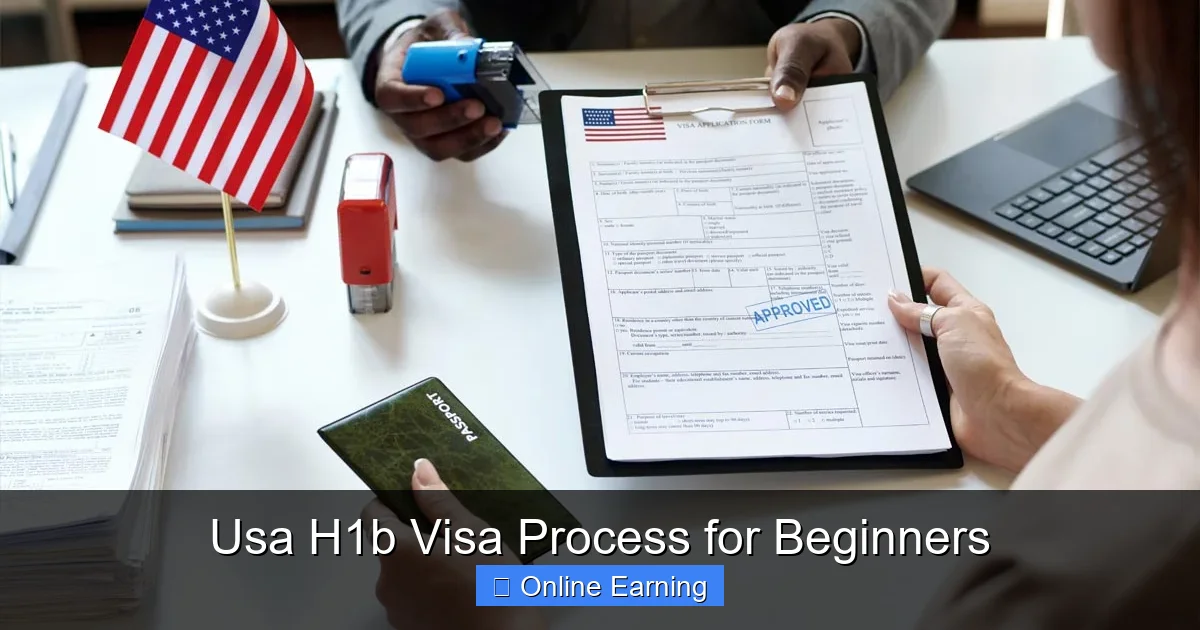
Once your employer files the H1B petition, the process moves through several stages. Let’s break it down step by step.
Visual guide about Usa H1b Visa Process for Beginners
Image source: visalibrary.com
Step 1: Employer Files the H1B Petition
Your U.S. employer must complete Form I-129 and submit it to USCIS along with supporting documents. These include:
- Evidence that the position qualifies as a specialty occupation.
- Your educational credentials and degree evaluation (if applicable).
- Proof of your employment and job duties.
The employer must also pay the required fees, which can total over $4,000, including the base filing fee, ACWIA fee, and fraud prevention fee.
Step 2: USCIS Reviews the Petition
After filing, USCIS reviews the petition for completeness and accuracy. If everything is in order, they assign a receipt number and move it into processing. This stage can take 3–6 months, depending on the service center and workload.
Step 3: Premium Processing (Optional)
For an extra $2,805, employers can request premium processing. This guarantees a decision within 15 calendar days. It’s especially useful if the employer needs your work authorization quickly.
Step 4: Visa Approval and Issuance
If approved, USCIS sends a notice of approval (Form I-797). Your employer then sends you the documents, and you can apply for an H1B visa at a U.S. consulate abroad. If you’re already in the U.S. on another visa, you may apply for change of status instead.
H1B Visa Fees and Costs: What You Need to Pay
The H1B process isn’t free. Both you and your employer will face several costs. Here’s a breakdown:
Employer Fees
- Base Filing Fee: $460
- ACWIA Fee: $750 or $1,500 (depending on company size)
- Fraud Prevention Fee: $500
- Premium Processing: $2,805 (optional)
- Public Law 114-113 Fee: $4,000 (if applicable)
Your Costs
- Legal Fees: If you hire an immigration attorney, expect $2,000–$5,000.
- Degree Evaluation: $100–$300
- Translation Fees: If documents aren’t in English, translation costs apply.
- Travel and Visa Application Fees: $190–$300 for the visa interview.
Total estimated cost: $6,000–$10,000+. Most of this is borne by your employer, but it’s good to be aware.
H1B Visa Validity and Extensions
An H1B visa is initially valid for three years and can be extended up to a total of six years. After that, you may be eligible for extensions under certain conditions.
When Can You Extend?
- Six-Year Limit: Most H1B holders reach the six-year limit and must leave the U.S.
- Extension Beyond Six Years: Possible if you’re in the process of obtaining a green card and your priority date is current.
- Change of Employer: You can switch jobs as long as the new employer files a new H1B petition.
Portability Rule
Thanks to the American Competitiveness in the Twenty-First Century Act (AC21), you can start working for a new employer as soon as their H1B petition is filed—even before it’s approved. This is called portability and gives you flexibility during the process.
H1B to Green Card: Your Path to Permanent Residency
Many H1B holders dream of staying in the U.S. permanently. The good news? The H1B can be a stepping stone to a green card.
Employment-Based Green Card
Your employer can sponsor you for a green card under the EB-2 or EB-3 category, depending on your education and experience. The process takes 2–5 years and involves:
- PERM labor certification (proving no qualified U.S. workers are available).
- Filing Form I-140 (Immigrant Petition).
- Waiting for your priority date to become current.
Adjustment of Status
Once your priority date is current, you can apply to adjust your status to permanent resident (green card holder) while still in the U.S. This avoids the need to leave the country for a visa interview.
Converting from H1B to Other Visas
If the green card process is too long, you can explore other options:
- H1B Extension Beyond Six Years: If you’re in the green card pipeline.
- Change to L1 Visa: If you have experience with a foreign company.
- F1 Optional Practical Training (OPT):strong>: If you’re a student, you can use OPT to work in the U.S. after graduation.
Common Mistakes to Avoid
Even experienced professionals make errors during the H1B process. Here are some common pitfalls and how to avoid them.
Mistake 1: Not Filing on Time
The H1B cap opens April 1 every year. Missing the deadline means you’re out—until next year. Set reminders and work with your employer early.
Mistake 2: Incomplete Documentation
Missing transcripts, job descriptions, or degree evaluations can lead to RFEs (Requests for Evidence) or denials. Double-check everything.
Mistake 3: Applying for the Wrong Job
Ensure your role truly qualifies as a specialty occupation. A vague job title or lack of degree requirements can sink your petition.
Mistake 4: Not Using Premium Processing When Needed
If your employer needs you to start soon, premium processing can save time. Don’t skip it if it’s an option.
Mistake 5: Ignoring the Lottery Odds
Don’t put all your hopes in one year. Consider backup plans like OPT, CPT, or other visa types.
Conclusion: Your H1B Journey Starts Now
The H1B visa process may seem daunting, but with the right knowledge and preparation, it’s absolutely achievable. From understanding eligibility to surviving the lottery and navigating extensions, each step brings you closer to your U.S. career dream.
Remember, the key is to start early, work closely with your employer, and stay informed. Whether you’re a recent graduate or a seasoned professional, the H1B opens doors—but only if you take action. So gather your documents, find a supportive employer, and get ready to file when April rolls around.
This guide is your starting point. Keep learning, stay persistent, and don’t let the process intimidate you. The U.S. job market needs skilled workers like you—and the H1B visa is your ticket in.
Frequently Asked Questions
What is the H1B visa lottery, and how does it work?
The H1B lottery is a random selection process used by USCIS when more petitions are submitted than visas available. Each year, only 85,000 H1B visas are issued, so applications are drawn from a pool. Selected applicants proceed with their petition; others are returned without refund.
Can I apply for an H1B visa on my own?
No, only U.S. employers can file H1B petitions on your behalf. You cannot self-petition. You must have a job offer from a qualifying employer who is willing to sponsor your visa.
How long does the H1B approval process take?
Without premium processing, the standard processing time is 3–6 months. With premium processing, you get a decision within 15 calendar days for an additional fee.
Can I change jobs while on an H1B visa?
Yes, thanks to the portability rule. As long as your new employer files an H1B petition, you can start working for them without leaving the U.S., even before the petition is approved.
What happens if I don’t win the H1B lottery?
If not selected, your employer’s petition is returned without refund. You can try again the following year, or explore other visa options like OPT, L1, or F1 status.
Can I convert my H1B to a green card?
Yes, many H1B holders use their employment to apply for a green card. Your employer can sponsor you under the EB-2 or EB-3 category, which leads to permanent residency over time.