Canada’s Express Entry system is your fast track to permanent residency and online earning opportunities. This step-by-step guide walks you through eligibility, the CRS score, application, and life in Canada. Whether you’re a student, skilled worker, or looking to work online from home, Express Entry opens doors to a better future—starting with a single CRS score.
Key Takeaways
- Express Entry is the main pathway to Canadian permanent residency for skilled workers. It’s fast, transparent, and points-based.
- Your CRS score determines your chances. It includes age, education, language skills, work experience, and adaptability.
- You must create a profile and enter the pool. Once in, you’ll get an Invitation to Apply (ITA) based on your CRS score.
- You have 60 days to submit your application after receiving an ITA. Missing the deadline means starting over.
- After approval, you’ll get a PR visa, allowing you to live, work, and study anywhere in Canada. You’ll also gain access to online earning opportunities.
- Express Entry is not just for workers—students and spouses can also benefit through programs like CEC and PNP.
- Online earning in Canada is possible with PR status. You can freelance, start a business, or work remotely for international clients.
📑 Table of Contents
- Canada Express Entry Visa Step by Step Guide: Your Fast Track to a New Life
- What Is Express Entry?
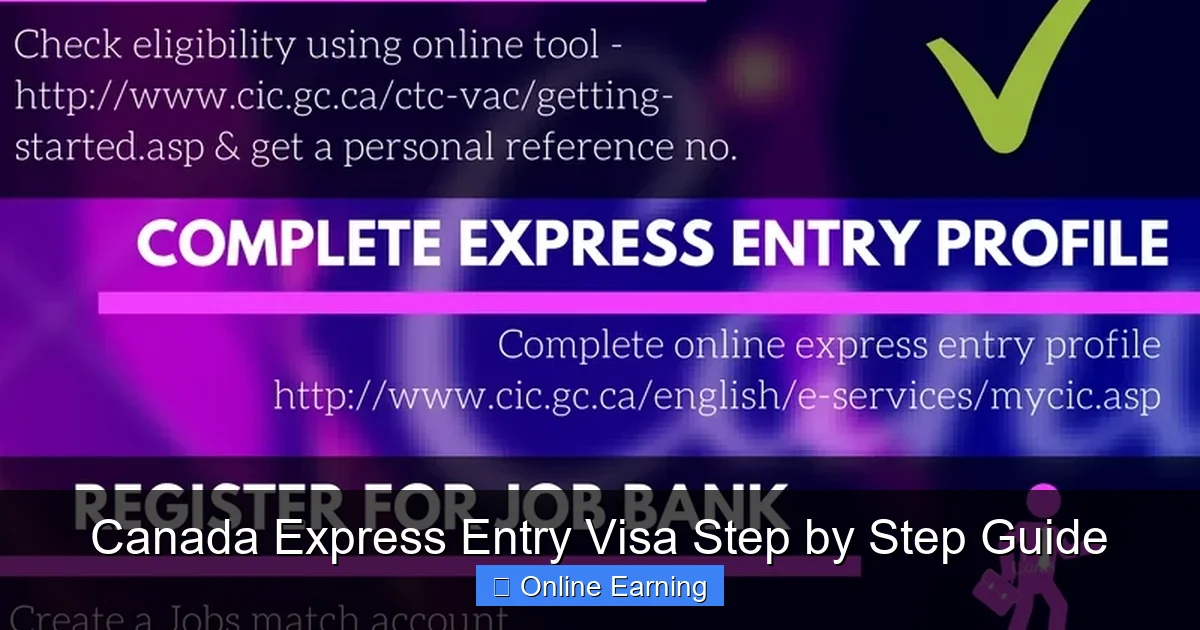
- Step 1: Check Your Eligibility
- Step 2: Take Language and Credential Tests
- Step 3: Create Your Express Entry Profile
- Step 4: Receive an Invitation to Apply (ITA)
- Step 5: Submit Your Application
- Step 6: Get Your PR and Start Earning Online
- Step 7: Settle and Thrive in Canada
- Common Mistakes to Avoid
- Final Thoughts: Your Journey Starts Now
Canada Express Entry Visa Step by Step Guide: Your Fast Track to a New Life
Imagine waking up in Toronto, working from a cozy home office, and earning money online—all while enjoying Canada’s clean air, strong economy, and inclusive culture. This isn’t a dream; it’s a reality for thousands who’ve used Canada’s Express Entry system to immigrate. If you’re a skilled worker, student, or professional looking to build a better life, Express Entry is your golden ticket. In this complete guide, we’ll walk you through every step—from understanding eligibility to landing your first remote job in Canada. Let’s turn that dream into a plan.
Canada’s Express Entry system was designed to attract the best and brightest from around the world. It’s fast, fair, and online—perfect for modern job seekers. Whether you’re a software developer, nurse, teacher, or entrepreneur, this system gives you a clear path to permanent residency. And once you’re in, the doors to online earning open wide. From freelancing to starting a digital business, your income potential is limitless. Let’s break it down, step by step.
What Is Express Entry?
Express Entry is a federal immigration system that manages applications for three main programs:
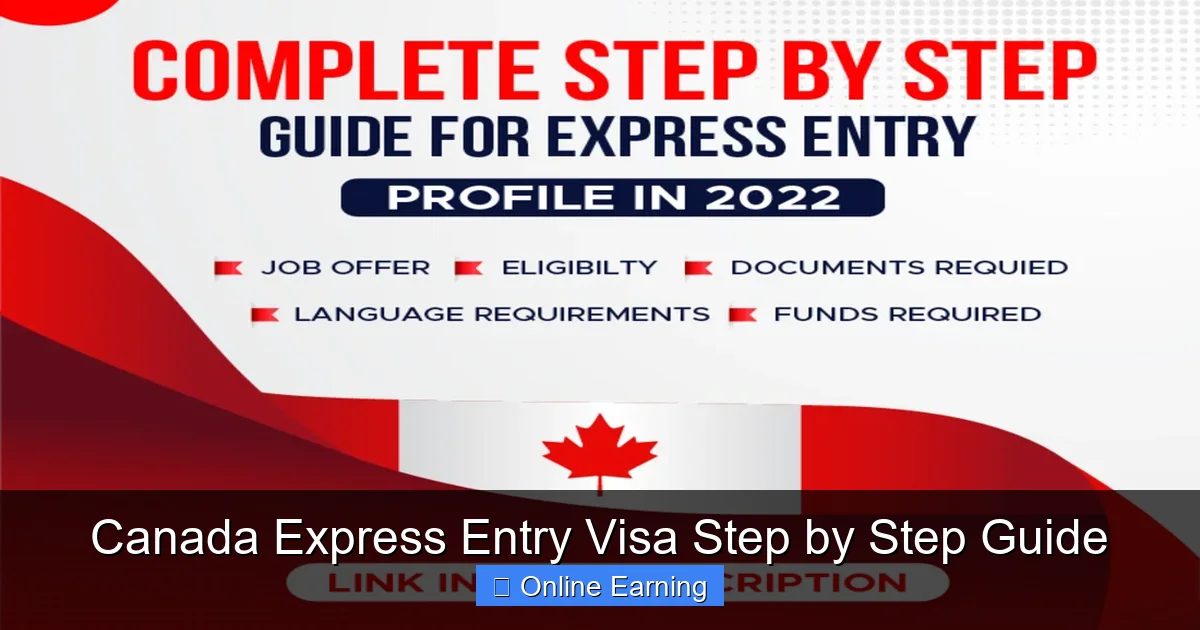
Visual guide about Canada Express Entry Visa Step by Step Guide
Image source: immigrationhumble.com
- Federal Skilled Worker Program (FSWP)
- Federal Skilled Trades Program (FSTP)
- Canadian Experience Class (CEC)
These programs are all part of the Express Entry pool, and candidates are ranked using a points-based system called the Comprehensive Ranking System (CRS). The higher your CRS score, the better your chances of getting an Invitation to Apply (ITA) for permanent residency.
How Does Express Entry Work?
It’s simple. First, you create an online profile and enter the Express Entry pool. Immigration, Refugees and Citizenship Canada (IRCC) uses your CRS score to rank candidates. Every two weeks, IRCC holds a draw and invites the highest-scoring candidates to apply for permanent residency. Once you receive an ITA, you have 60 days to submit your full application.
For example, let’s say you’re a 30-year-old software developer with a master’s degree, fluent in English and French, and three years of work experience. Your CRS score might be around 470. If the cutoff in a recent draw was 460, you’d likely receive an ITA. But if it’s 480, you might need to improve your score by retaking a language test or adding a sibling in Canada.
Why Choose Express Entry?
- Speed: Most applications are processed in 6 months or less.
- Clarity: You know exactly what you need to do to qualify.
- Flexibility: You can apply from anywhere in the world.
- Online Earning: Once you’re a PR, you can work and earn online immediately.
Step 1: Check Your Eligibility
Before you start, make sure you meet the basic requirements. Express Entry has different criteria for each program, but here’s a quick checklist:
Visual guide about Canada Express Entry Visa Step by Step Guide
Image source: softamo.org
For FSWP and FSTP:
- You must meet minimum language requirements (CLB 7 in English or NCLC 7 in French)
- You need at least one year of skilled work experience
- You must get an Educational Credential Assessment (ECA) for your foreign education
- You must prove you have enough funds to support yourself and your family
- You must be able to work in Canada or have a job offer
For CEC:
- You must have at least one year of skilled work experience in Canada within the last three years
- You must meet language requirements (CLB 7 for most jobs)
- You must have a valid job offer or a provincial nomination
Pro Tip:
Use the Come to Canada Readiness Tool (CCRT) on the IRCC website. It’s free and helps you estimate your CRS score before you apply.
Step 2: Take Language and Credential Tests
Your CRS score is heavily influenced by your language skills and education. Let’s break down the key tests you’ll need.
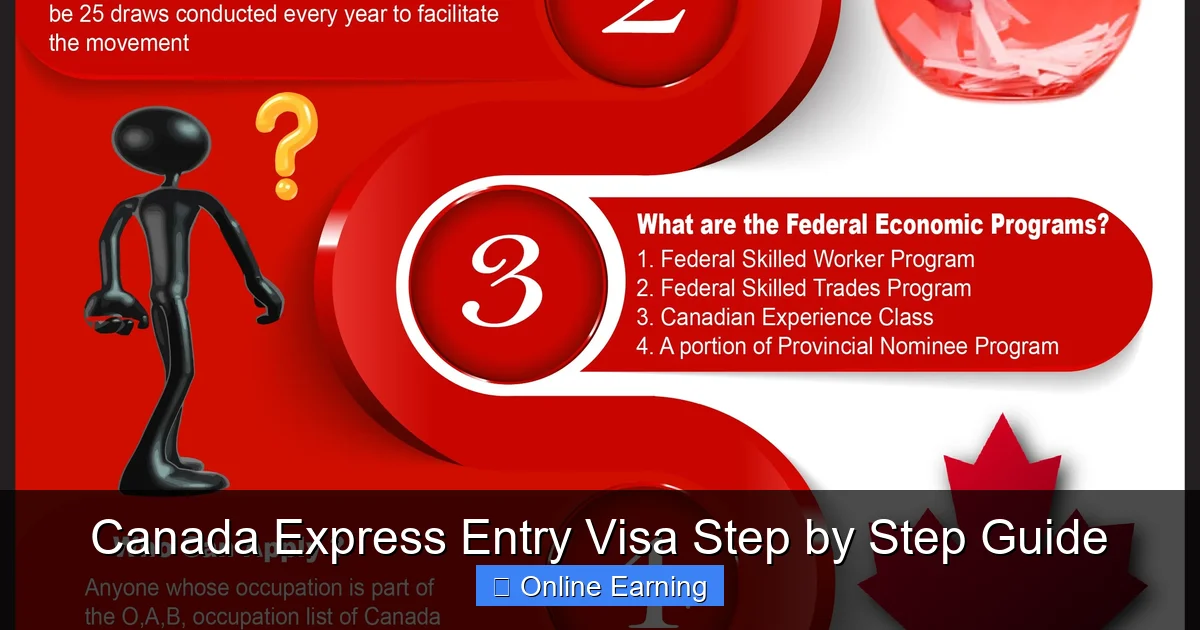
Visual guide about Canada Express Entry Visa Step by Step Guide
Image source: i.redd.it
Language Tests
You must take an approved language test. The most common are:
- IELTS (International English Language Testing System) – Accepted for English
- CELPIP (Canadian English Language Proficiency Index Program) – Also accepted
- TEF (Test d’Évaluation de Français) – For French speakers
- TCF Canada – Another French option
For Express Entry, you need a CLB 7 (intermediate level). That means:
- IELTS: 6.0 in each band
- CELPIP: 7 in each section
- TEF: 361+ in reading and listening
Educational Credential Assessment (ECA)
If you studied outside Canada, you need an ECA to prove your education is equal to a Canadian degree. Popular providers include:
- World Education Services (WES)
- International Credential Assessment Service of Canada (ICAS)
- Medical Council of Canada (for doctors)
Cost: $200–$300 CAD. Processing time: 2–4 weeks. Keep the report—you’ll need it for your profile.
Job Offer and Provincial Nomination (Optional but Helpful)
If you have a valid job offer from a Canadian employer, you get 50 extra CRS points. A provincial nomination adds 600 points—almost guaranteed an ITA. Many provinces run Express Entry-aligned streams, like British Columbia’s Tech Pilot or Ontario’s Human Capital Priorities Stream.
Step 3: Create Your Express Entry Profile
This is the most important step. You’ll need to:
- Go to IRCC’s Express Entry page
- Create a GCKey account
- Fill out the online profile form
What to Include in Your Profile
- Personal Information: Name, date of birth, nationality
- Education: Degrees, certificates, ECA report
- Language Skills: Test scores and CLB levels
- Work Experience: Job titles, employers, dates
- Spouse/Partner (if applicable): Their education, language, and work experience
- Adaptability: Family in Canada, Canadian education or work
Example Profile:
Maria, 28, from India, has a BSc in Computer Science. She scored IELTS 8.0 (CLB 9), has 4 years of work experience as a software engineer, and her brother lives in Vancouver. She’s eligible for FSWP and expects a CRS score of 480.
Submit and Wait
Once submitted, your profile goes into the Express Entry pool. You’ll get a confirmation email and a unique profile number. IRCC will notify you if you’re invited to apply.
Step 4: Receive an Invitation to Apply (ITA)
Every two weeks, IRCC holds a draw and invites candidates with the highest CRS scores. The cutoff varies—sometimes it’s 450, sometimes 500. You’ll get an email and notification in your GCKey account.
What Happens After the ITA?
- You have 60 days to submit your full application
- You must provide police certificates, medical exams, and proof of funds
- Your application must be complete and accurate—any errors can delay processing
Pro Tip:
Start preparing your documents before you receive the ITA. That way, you can submit your application within days—not weeks.
Step 5: Submit Your Application
Once you get your ITA, log into your GCKey account and upload your documents. You’ll need:
- Passport or travel document
- Language test results
- ECA report
- Proof of work experience (reference letters, pay stubs)
- Police clearance certificates from every country you’ve lived in
- Medical exam results
- Proof of funds (bank statements)
Pay the Fees
- Principal applicant: $1,365 CAD
- Spouse/partner: $155 CAD
- Child: $155 CAD
Payment is online via credit card or Interac. Save your receipt—you’ll need it for tracking.
Track Your Application
Use the My Application tool on IRCC’s website. You’ll get updates on your status. Most applications are processed in 6 months or less.
Step 6: Get Your PR and Start Earning Online
Once approved, you’ll receive a Confirmation of Permanent Residence (COPR) and a permanent resident card. You can move to Canada immediately—even before your card arrives.
Your First Steps in Canada
- Set up a bank account – Most banks offer online accounts for newcomers
- Get a Social Insurance Number (SIN) – Required for any paid work
- Register for health insurance – Provincial plans cover most services
- Find a place to live – Consider renting initially
Start Earning Online
Now the fun begins. With PR status, you can:
- Freelance – Offer services on Upwork, Fiverr, or Toptal
- Start a digital business – Sell products on Etsy or Shopify
- Work as a remote employee – Many Canadian and international companies hire PRs
- Apply for grants and loans – Newcomers often qualify for startup funding
Example: Online Earning in Canada
After landing in Calgary, Raj started a freelance web design business. He used his PR status to open a bank account, get a SIN, and register with the Alberta government’s newcomer portal. Within 3 months, he had clients from the U.S. and Europe, earning $5,000 CAD/month online.
Step 7: Settle and Thrive in Canada
Canada welcomes you with open arms. Here’s how to make the most of your new life.
Access to Benefits
- Healthcare – Free for PRs (after a waiting period)
- Social Programs – Child benefits, EI, and more
- Education – Tuition fees for PRs are lower than for international students
Build Your Network
- Join local meetups and online communities
- Use LinkedIn to connect with professionals
- Consider mentorship programs for newcomers
Stay Updated
Follow IRCC on social media and sign up for email alerts. Immigration rules can change—stay informed.
Common Mistakes to Avoid
- Not checking your CRS score early – Use the CCRT tool
- Waiting too long to apply – Start your profile now
- Providing incomplete documents – Double-check everything
- Ignoring provincial nominations – They boost your score
- Not preparing for life in Canada – Research housing, jobs, and culture
Final Thoughts: Your Journey Starts Now
Canada’s Express Entry system is not just about immigration—it’s about opportunity. With PR status, you can work, study, and earn online from anywhere in the world. Whether you’re a tech worker, artist, or entrepreneur, Canada offers a stable, inclusive environment to grow your career and life.
Remember: the process can feel overwhelming, but every expert was once a beginner. Start with your profile, take the tests, and keep improving your CRS score. One draw away from your dream.
Ready to begin? Visit IRCC’s website today. Your future in Canada is waiting.
Frequently Asked Questions
How long does it take to get a Canada Express Entry visa?
Most Express Entry applications are processed in 6 months or less. Once you receive an Invitation to Apply (ITA), you have 60 days to submit your full application. Processing times can vary slightly depending on your country and the completeness of your file.
Can I work in Canada while my Express Entry application is pending?
Yes, if you apply under the Federal Skilled Worker Program or Canadian Experience Class, you may be eligible for open work permits. You’ll need to submit a separate application with your Express Entry profile. Processing times for work permits are usually faster than for permanent residency.
Do I need a job offer to apply through Express Entry?
No, a job offer is not mandatory. However, having one can increase your CRS score by 50 points. Some provinces also run Express Entry-aligned streams that target specific occupations, so a job offer may improve your chances in a provincial nomination.
What is the minimum CRS score needed for Express Entry?
There is no fixed minimum. The cutoff score changes with every draw. In recent years, cutoffs have ranged from 450 to over 500. To improve your chances, focus on boosting your language scores, education, and work experience.
Can my spouse’s qualifications help my Express Entry application?
Absolutely. If your spouse or common-law partner has education, language skills, or work experience, they can add up to 40–50 points to your CRS score. Make sure to include them in your profile and provide all supporting documents.
Once I get PR, can I work and earn money online in Canada?
Yes. As a permanent resident, you can work for any employer, start your own business, or work remotely for international clients. You’ll need a Social Insurance Number (SIN) to earn income, which you can apply for after landing in Canada.