Dreaming of working remotely from a sunny beach or a quiet mountain cabin? Many countries now offer digital nomad visas that let you live and work abroad legally—without the long waits. From Portugal to Mexico, these nations are making it easier than ever to pack your laptop and go. Whether you’re a freelancer, entrepreneur, or remote employee, this guide reveals which countries process applications the fastest so you can start your global adventure sooner.
Key Takeaways
- Digital nomad visas are designed for remote workers: These visas allow professionals to live and work in a foreign country without needing local employment or a traditional job offer.
- Processing times vary widely: Some countries approve applications in days, while others take months. Portugal, Mexico, and Georgia are among the fastest.
- Requirements focus on income and health: Most visas require proof of remote income (e.g., $2,000–$3,000/month), health insurance, and a clean criminal record.
- Tax benefits are a major draw: Countries like Portugal and Georgia offer favorable tax regimes for remote workers, helping you keep more of your income.
- Application speed depends on documentation: Submitting complete, accurate documents can cut processing time in half. Always double-check requirements before applying.
- Some countries offer e-residency instead of visas: Estonia and Latvia provide digital identities for entrepreneurs and freelancers, though they don’t grant physical residency.
📑 Table of Contents
- Introduction: The Rise of the Digital Nomad Lifestyle
- What Are Digital Nomad Visas?
- Why Do Countries Offer Digital Nomad Visas?
- The Fastest Countries for Digital Nomad Visas
- How to Apply for a Digital Nomad Visa: Step-by-Step
- Tax Implications for Digital Nomads
- Best Destinations for Digital Nomads in 2024
- Conclusion: Start Your Journey Today
Introduction: The Rise of the Digital Nomad Lifestyle
Imagine waking up to the sound of waves, working from a rooftop café in Lisbon, or sipping coffee in a mountain village in Georgia. This isn’t a dream—it’s the reality for millions of digital nomads worldwide. With the rise of remote work, companies are no longer tied to office locations. Employees can now live anywhere, as long as they can access the internet. But how do you legally stay and work abroad?
Enter digital nomad visas. These are special permits designed for remote workers, freelancers, and entrepreneurs who want to live in a foreign country while earning income online. Unlike traditional visas, digital nomad visas don’t require a local job offer. Instead, they focus on your ability to support yourself financially and contribute to the local economy through spending and taxes.
What’s even better? Many countries are now processing these visas quickly—some in just a few days or weeks. That means you could be packing your bags sooner than you think. In this article, we’ll explore the fastest countries offering digital nomad visas in 2024, what makes them ideal for remote workers, and how to apply efficiently. Whether you’re a tech freelancer, a content creator, or a remote employee, your dream of living abroad is closer than ever.
What Are Digital Nomad Visas?
A digital nomad visa is a long-term residence permit for people who work remotely—typically from home offices, co-working spaces, or cafes. These visas are issued by countries looking to attract skilled remote workers, boost tourism, and stimulate local economies. Unlike tourist or short-term visas, digital nomad visas allow you to stay for months or even years, as long as you meet the requirements.
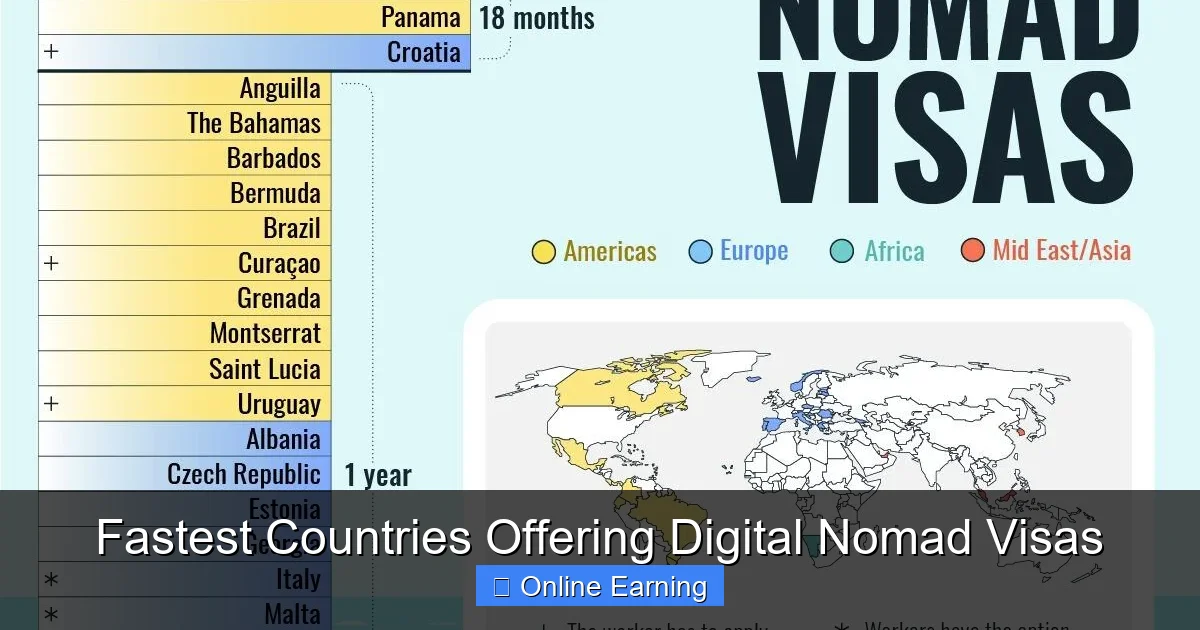
Visual guide about Fastest Countries Offering Digital Nomad Visas
Image source: assets.zerohedge.com
How Do They Differ From Tourist Visas?
Most tourist visas only allow stays of 30 to 90 days. Once you leave, you can’t return immediately—you may need to wait 30 days before re-entering. Digital nomad visas, on the other hand, are valid for 1 to 2 years (with possible extensions). They let you stay longer, work legally, and even access public services like healthcare and banking.
Who Can Apply?
Digital nomad visas are open to:
- Freelancers and independent contractors
- Remote employees of foreign companies
- Digital entrepreneurs (e.g., online store owners)
- Remote consultants and coaches
You don’t need a job offer from a local company. Instead, you must prove you earn enough to support yourself—usually $2,000 to $3,000 per month, depending on the country.
Why Do Countries Offer Digital Nomad Visas?
Governments around the world are racing to attract digital nomads. Why? Because remote workers bring in money without needing local jobs. They spend on housing, food, co-working spaces, and tourism—boosting the local economy. Countries like Portugal and Mexico see millions of visitors annually, and digital nomads are a growing part of that number.
Visual guide about Fastest Countries Offering Digital Nomad Visas
Image source: img-s-msn-com.akamaized.net
Economic Benefits
When a digital nomad stays in a country, they contribute to GDP through spending. For example, renting a co-working space, dining out, and paying for internet all help local businesses. Some countries even offer tax incentives to attract remote workers.
Tourism and Cultural Exchange
Digital nomads often stay longer than tourists. They explore cities, learn about local cultures, and sometimes even move to one country for years. This creates a steady stream of visitors, which is great for tourism boards.
The Fastest Countries for Digital Nomad Visas
Not all digital nomad visas are created equal. Some countries process applications in days, while others take weeks or months. Here are the fastest and most reliable options for 2024.
Visual guide about Fastest Countries Offering Digital Nomad Visas
Image source: img-s-msn-com.akamaized.net
Portugal: The Golden Standard
Portugal is a top destination for digital nomads. Its Digital Nomad Visa allows remote workers to live in Lisbon, Porto, or other cities for up to two years. Applications are processed in 30 days, and the country offers excellent infrastructure, low crime, and a welcoming expat community.
Key Features:
- Valid for 1 or 2 years
- Requires proof of income ($2,940/month for a single person)
- Health insurance and clean criminal record required
- No local job offer needed
Why It’s Fast:
Portugal’s digital nomad program is well-established. The government has streamlined the process, and consulates in the U.S., Canada, and Europe process applications efficiently.
Tip:
Apply online through the Portuguese consulate in your home country. Make sure your bank statements are recent and your health insurance covers Portugal.
Mexico: Sun, Culture, and Speed
Mexico’s Temporary Resident Visa for remote workers is valid for one year and renewable. The application can be processed in 10 to 15 business days if you apply online. Mexico offers beautiful cities like Playa del Carmen, Tulum, and Mexico City—perfect for digital nomads.
Key Features:
- Valid for 1 year (renewable)
- Requires $2,700/month income (single) or $4,000/month (family)
- Health insurance and passport valid for at least 6 months
Why It’s Fast:
Mexico allows online applications through its e-Visa system. You can submit documents digitally, and approval usually takes under two weeks.
Tip:
Use a trusted visa service or consult the Mexican consulate in your country. Avoid third-party websites that charge high fees.
Georgia: The Hidden Gem
Georgia offers one of the fastest digital nomad visas in the world. The Remotely From Georgia (RFG) visa can be approved in 3 to 5 business days. The country is known for its low cost of living, stunning landscapes, and friendly locals.
Key Features:
- Valid for 1 year
- Requires $2,000/month income
- No health insurance required (but recommended)
Why It’s Fast:
Georgia uses an online application system. You submit documents via email, and approval is often instant. The government wants to attract remote workers to boost its economy.
Tip:
Apply via email to rfv@mfa.gov.ge. Include your passport, bank statement, and a letter explaining your remote work.
Estonia: The Digital Pioneer
Estonia is a leader in digital innovation. While it doesn’t offer a traditional visa, it provides e-Residency—a digital ID for non-EU entrepreneurs and freelancers. Processing takes 10 to 15 days. You can run your business online, open a bank account, and pay taxes—all from Estonia.
Key Features:
- Digital ID valid for 5 years
- Allows online business registration
- No physical residency required
Why It’s Fast:
Estonia’s e-Residency is fully digital. You apply online, get your ID card by mail, and start working immediately.
Tip:
E-Residency is for business owners, not remote employees. If you’re self-employed, it’s a great option. Otherwise, consider Estonia’s Digital Nomad Visa (available in 2024).
Costa Rica: Nature Meets Productivity
Costa Rica’s Digital Nomad Visa is valid for 1 year and renewable. Applications are processed in 15 to 20 business days. The country offers lush rainforests, beaches, and a stable political environment.
Key Features:
- Valid for 1 year (renewable)
- Requires $3,000/month income
- Health insurance required
Why It’s Fast:
Costa Rica’s consulates in the U.S. and Latin America are efficient. You can apply online or in person.
Tip:
Apply at least 30 days before your planned move. Bring certified translations of your documents.
Spain: The European Dream
Spain’s Digital Nomad Visa is valid for 1 year and renewable. Processing takes 15 to 30 days. Cities like Barcelona, Madrid, and Valencia are popular among remote workers.
Key Features:
- Valid for 1 year (renewable)
- Requires $2,700/month income
- Health insurance and clean criminal record
Why It’s Fast:
Spain’s consulates in the U.S. and Canada are experienced with digital nomad applications. The process is online and well-documented.
Tip:
Apply through the Spanish consulate in your country. Use a courier to send documents if required.
How to Apply for a Digital Nomad Visa: Step-by-Step
Applying for a digital nomad visa doesn’t have to be stressful. Follow these steps to increase your chances of approval and speed up the process.
Step 1: Check Eligibility
Each country has different requirements. Generally, you need:
- A passport valid for at least 6 months
- Proof of remote income (bank statements, contracts)
- Health insurance covering the duration of your stay
- A clean criminal record
Step 2: Gather Documents
Common documents include:
- Passport copy
- Bank statements (last 3–6 months)
- Employment contract or freelance work proof
- Health insurance certificate
- Police clearance certificate
- Letter explaining your remote work (optional but helpful)
Step 3: Apply Online or In Person
Most countries allow online applications. Submit documents via email or through a consulate portal. Pay the visa fee (usually $200–$300).
Step 4: Wait for Approval
Processing times vary. Use tracking tools if available. Follow up if there’s a delay.
Step 5: Travel and Register
Once approved, travel to the country and register with local authorities. Some countries require a medical exam or fingerprinting.
Tax Implications for Digital Nomads
Taxes can be tricky when living abroad. Some countries tax your worldwide income, others only tax income earned locally. Here’s what to know.
Portugal: Non-Habitual Resident (NHR) Tax Regime
Portugal’s NHR tax regime allows remote workers to pay 0% on foreign income for 10 years. This is a huge benefit for digital nomads.
Georgia: No Personal Income Tax
Georgia doesn’t tax personal income from foreign sources. You only pay taxes if you earn income locally.
Mexico: Tax on Worldwide Income
Mexico taxes residents on worldwide income. You may need to file a tax return if you earn more than $100,000 annually.
Tip:
Consult a tax professional before moving. They can help you understand your obligations in your home country and abroad.
Best Destinations for Digital Nomads in 2024
Here are the top countries for remote work, ranked by affordability, internet speed, and quality of life.
- Georgia: Low cost of living, fast internet, friendly locals.
- Portugal: Great infrastructure, strong community, tax benefits.
- Mexico: Beautiful cities, fast processing, cultural richness.
- Costa Rica: Natural beauty, stable government, eco-friendly.
- Spain: Vibrant cities, excellent healthcare, EU access.
Honorable Mentions:
- Thailand: Long-term visa options, low cost, but slower processing.
- Malta: EU country, but higher taxes and slower approval.
- Barbados: Fast processing, but high income requirement ($50,000/year).
Conclusion: Start Your Journey Today
The world is your office. With digital nomad visas, you can live and work from some of the most beautiful places on Earth—without breaking the law. Countries like Portugal, Mexico, and Georgia are making it easier than ever to apply and start your journey.
Remember, the key to a smooth application is preparation. Gather your documents early, choose a country that fits your lifestyle, and apply as soon as you’re ready. The faster you apply, the sooner you can trade your commute for a sunrise over the ocean.
So what are you waiting for? Pack your laptop, grab your passport, and start exploring the fastest countries offering digital nomad visas. Your global adventure begins now.
Frequently Asked Questions
What is a digital nomad visa?
A digital nomad visa is a long-term residence permit for remote workers, freelancers, and entrepreneurs. It allows you to live and work in a foreign country without needing a local job offer. Most require proof of income, health insurance, and a clean criminal record.
How long does it take to get a digital nomad visa?
Processing times vary. Some countries like Georgia and Mexico approve applications in 3–5 days, while others like Portugal and Spain take 15–30 days. Always check the consulate’s website for the latest info.
Do I need a job offer from a local company?
No. Digital nomad visas are for remote workers earning income from abroad. You can be a freelancer, remote employee, or online entrepreneur.
How much money do I need to earn?
Requirements vary. Most countries require $2,000–$3,000 per month. For example, Georgia requires $2,000/month, while Costa Rica requires $3,000/month.
Can I bring my family?
Yes. Many countries allow dependents (spouse and children) to join you. They may need their own income proof or health insurance.
Is health insurance required?
Yes. Most digital nomad visas require valid health insurance covering the duration of your stay. Check the policy covers medical emergencies and hospitalization.