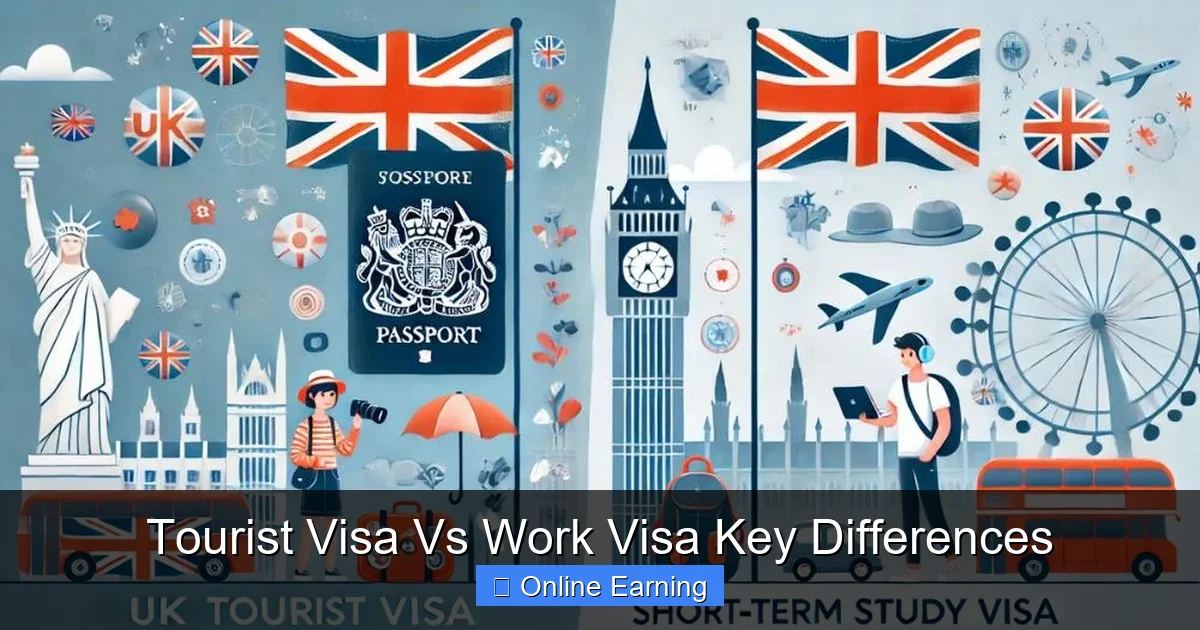
Choosing between a tourist visa and a work visa is more than just picking a travel document—it shapes your entire experience abroad. A tourist visa lets you explore countries, but a work visa allows you to earn, contribute, and build a future. Understanding their differences helps you avoid legal issues and make the right choice for your goals.
Key Takeaways
- Purpose of Stay: A tourist visa is for leisure, sightseeing, and short visits, while a work visa is for employment, business, and long-term professional engagement.
- Duration & Renewal: Tourist visas are typically short-term (3–180 days), while work visas can be temporary or permanent and often require renewal based on job contracts.
- Earning Eligibility: With a tourist visa, you cannot legally work or earn income from within the host country—doing so risks deportation or bans.
- Application Requirements: Work visas demand job offers, employer sponsorship, and professional qualifications, whereas tourist visas focus on proof of funds and return intent.
- Path to Residency: Some work visas lead to permanent residency or citizenship, unlike most tourist visas, which are strictly temporary.
- Legal Consequences: Working on a tourist visa is illegal in most countries and can result in fines, bans, or criminal charges.
- Cost & Processing Time: Work visas usually cost more and take longer to process due to background checks, labor approvals, and documentation.
📑 Table of Contents
- Tourist Visa vs Work Visa: Understanding the Core Differences
- What Is a Tourist Visa?
- What Is a Work Visa?
- Key Differences Between Tourist and Work Visas
- Can You Work on a Tourist Visa?
- How to Choose Between a Tourist Visa and a Work Visa
- Common Mistakes to Avoid
- Frequently Asked Questions
- Conclusion
Tourist Visa vs Work Visa: Understanding the Core Differences
Planning to travel abroad? You’ve probably heard terms like “tourist visa” and “work visa” thrown around. But what do they really mean? And more importantly, how do they affect your time overseas?
A tourist visa and a work visa serve completely different purposes. Think of them like two different keys—one unlocks the door to explore new cities and beaches, while the other opens the door to a job, a career, or even a new life. Choosing the wrong one isn’t just a minor inconvenience; it can lead to serious legal trouble, financial loss, or even being banned from returning.
In this guide, we’ll break down everything you need to know about tourist visas vs work visas—how they differ, what each one allows (and doesn’t allow), and how to pick the right one for your goals. Whether you’re dreaming of a year-long backpacking trip or a remote job in another country, understanding these visas is essential.
What Is a Tourist Visa?
A tourist visa is a travel document issued by a country to allow foreign visitors to enter for leisure, tourism, or short-term visits. Think of it as your passport to fun—beaches, museums, food tours, family visits, and cultural experiences.
Who Can Apply?
Most people who want to travel for vacation, attend a wedding, or take a cruise fall under this category. You don’t need a job offer or a long-term plan. As long as you can prove you’ll return home after your trip, you’re a good candidate.
Typical Duration
Tourist visas usually last from 30 to 180 days, depending on the country. Some nations offer multiple-entry visas, meaning you can come and go as you please during the validity period. Others issue single-entry visas, requiring you to leave before reapplying.
Allowed Activities
With a tourist visa, you can:
- Visit attractions and landmarks
- Stay with friends or family
- Attend short-term conferences or events (if permitted)
- Take language or cultural exchange programs (short-term, non-remunerated)
But you **cannot** work, get paid, or run a business.
Example: Tourist Visa in Practice
Imagine you’re from Canada and want to visit Japan for two weeks. You apply for a Japanese tourist visa, show proof of hotel bookings, round-trip tickets, and bank statements. Once approved, you fly in, explore Tokyo, hike Mount Fuji, and return home—all legally and without issues.
What Is a Work Visa?
A work visa is a legal document that permits foreign nationals to live and work in a country under specific employment conditions. Unlike a tourist visa, this one is tied to a job, a business, or professional activity.
Who Needs It?
If you’re offered a job in another country—whether as a software engineer, teacher, nurse, or freelance contractor—you’ll need a work visa. It’s also required if you plan to start a business, invest in a company, or participate in long-term training programs with compensation.
Types of Work Visas
Countries offer various work visa categories:
- Skilled Worker Visa: For professionals with specialized skills (e.g., IT, healthcare)
- Student-Work Visa: Allows international students to work part-time while studying
- Intra-Company Transfer Visa: For employees moving within a multinational company
- Seasonal Work Visa: For agricultural or tourism-related temporary jobs
- Investor Visa: For entrepreneurs or investors starting businesses
Duration & Renewal
Work visas can last from a few months to several years, depending on the contract. Some, like skilled worker visas, may lead to permanent residency after a certain period. Renewal is common and often tied to job performance or contract extensions.
Example: Work Visa in Action
Let’s say you’re a graphic designer from Brazil and get hired by a marketing firm in Germany. The company sponsors your work visa, which includes a job contract, salary proof, and health insurance. You move to Berlin, work full-time, and after two years, may apply for a permanent residence permit.
Key Differences Between Tourist and Work Visas
Now that we’ve defined each visa, let’s compare them side by side. The differences are more than just semantics—they impact your rights, responsibilities, and future.
1. Purpose of Entry
- Tourist Visa: For leisure, tourism, visiting family, or short cultural exchanges.
- Work Visa: For employment, business, or professional engagement.
2. Legal Right to Work
This is the biggest difference. With a tourist visa, you **cannot** legally work or receive payment for services. If you do, you’re violating immigration laws. A work visa explicitly allows you to be employed and earn a salary.
3. Sponsorship & Job Offer
Tourist visas don’t require a job. You apply independently. Work visas almost always need an employer sponsor—they submit documents, prove the job is genuine, and may need to advertise the position locally first.
4. Duration of Stay
Tourist visas are short-term. Work visas can be temporary or long-term, with options to extend or transition to permanent status.
5. Path to Residency
Some work visas (like skilled worker visas in Canada or Australia) offer a direct route to permanent residency. Tourist visas do not.
6. Cost & Processing Time
Work visas are more expensive and take longer to process due to background checks, labor market tests, and employer involvement.
Can You Work on a Tourist Visa?
This is a common question—and a dangerous misconception. In most countries, **working on a tourist visa is illegal**.
For example:
- In the U.S., working on a B-2 (tourist) visa can lead to deportation and a 10-year reentry ban.
- In the UK, doing any paid work violates visa terms and can result in a ban.
- In Australia, only certain activities like au pairing or volunteer work (unpaid) are allowed on a tourist visa.
Some people try to freelance, teach English, or do online work while on vacation—but unless your country explicitly allows it (like digital nomad visas), this is risky.
What About Remote Work?
Even if your job is remote and you’re paid in another country, if you’re physically in a country on a tourist visa and doing paid work, it’s still considered illegal. The location of your work matters, not where the company is based.
Exceptions: Digital Nomad Visas
Some countries (like Portugal, Estonia, and Mexico) now offer digital nomad visas. These are **not** tourist visas—they’re work visas designed for remote workers. They allow you to live and work legally while traveling.
How to Choose Between a Tourist Visa and a Work Visa
So how do you decide which one to apply for? It depends on your goals.
Ask Yourself These Questions:
- Do I want to travel and relax, or work and earn?
- Am I planning to stay long-term or short-term?
- Do I have a job offer or business plan?
- Am I willing to go through a longer, more complex application process?
Scenario 1: You’re a Digital Nomad
You want to travel while working remotely. A tourist visa won’t cut it. Look into digital nomad visas or skilled worker visas that allow remote work.
Scenario 2: You’re Visiting Family
A tourist visa is perfect. No need for work-related documents.
Scenario 3: You’re Starting a Business
You’ll need a business or investor visa, not a tourist one.
Pro Tip:
If you’re unsure, consult an immigration lawyer or use official government websites. The last thing you want is to overstay or work illegally.
Common Mistakes to Avoid
Even experienced travelers make mistakes when dealing with visas. Here are the most common ones:
Mistake 1: Assuming All Travel Visas Are the Same
Some countries have visa-free agreements. Others require visas. Always check the specific rules for your nationality.
Mistake 2: Overstaying Your Visa
Tourist visas have strict duration limits. Overstaying can lead to fines, bans, or being labeled a “visa violator.”
Mistake 3: Working Without Authorization
As mentioned, this is illegal and can ruin your future travel plans.
Mistake 4: Applying for the Wrong Visa
Applying for a tourist visa when you need a work visa can result in denial and affect future applications.
Mistake 5: Not Renewing on Time
If your visa expires, you may face penalties. Always track your visa dates.
Frequently Asked Questions
Can I extend my tourist visa?
It depends on the country. Some allow extensions for valid reasons like medical emergencies, but others don’t. Always check with local immigration authorities before applying.
Visual guide about Tourist Visa Vs Work Visa Key Differences
Image source: jrimmigrationconsultants.com
Visual guide about Tourist Visa Vs Work Visa Key Differences
Image source: i.pinimg.com
Visual guide about Tourist Visa Vs Work Visa Key Differences
Image source: doniviaoverseas.com
Can I apply for a work visa without a job offer?
Not usually. Most countries require a job offer or employer sponsorship. However, some investor or self-employment visas allow independent applications if you have sufficient funds or a business plan.
How long does it take to get a work visa?
Processing times vary—from 2 weeks to 6 months. It depends on the country, type of visa, and whether background checks or labor approvals are needed.
Can I bring my family on a work visa?
Yes, many work visas allow dependents (spouse and children) to join. They usually get dependent visas, which may allow limited work or study rights.
What happens if I get caught working on a tourist visa?
You could face deportation, fines, a ban from reentering the country, or even criminal charges in severe cases. Always follow visa rules.
Are tourist visas easier to get than work visas?
Generally, yes. Tourist visas require less documentation, no job offers, and shorter processing times. But they come with strict activity limits.
Conclusion
Choosing between a tourist visa and a work visa isn’t just about crossing borders—it’s about shaping your future. A tourist visa opens the door to new experiences, cultures, and memories. A work visa opens doors to careers, income, and long-term opportunities.
The key is to understand what each visa allows and align it with your goals. Never assume—always verify. If you’re planning to work, don’t rely on a tourist visa. If you’re just visiting, don’t waste time on complex work visa applications.
And remember: immigration laws are strict for a reason. Following the rules protects your freedom to travel, work, and grow—now and in the future. So plan wisely, apply correctly, and make the most of your journey, whether it’s across the world or across the globe—legally and successfully.
Frequently Asked Questions
Can I extend my tourist visa?
It depends on the country. Some allow extensions for valid reasons like medical emergencies, but others don’t. Always check with local immigration authorities before applying.
Can I apply for a work visa without a job offer?
Not usually. Most countries require a job offer or employer sponsorship. However, some investor or self-employment visas allow independent applications if you have sufficient funds or a business plan.
How long does it take to get a work visa?
Processing times vary—from 2 weeks to 6 months. It depends on the country, type of visa, and whether background checks or labor approvals are needed.
Can I bring my family on a work visa?
Yes, many work visas allow dependents (spouse and children) to join. They usually get dependent visas, which may allow limited work or study rights.
What happens if I get caught working on a tourist visa?
You could face deportation, fines, a ban from reentering the country, or even criminal charges in severe cases. Always follow visa rules.
Are tourist visas easier to get than work visas?
Generally, yes. Tourist visas require less documentation, no job offers, and shorter processing times. But they come with strict activity limits.